Lost my SSD after a hard reset and i thought the world ended. … I paid the rush fee and within 24 hours and a few extra minutes my business came back to life like tragedy never struck in the first place. They saved everything i thought i lost.
SSD Data Recovery in Denton Texas, TX
345 Google Reviews · 2M+ Followers · Nationwide Service
- $100 Flat Diagnostic
- Free Shipping (contiguous US)
When your SSD fails in Denton, TX, the data stored on those NAND flash chips does not have to be gone forever.
About this recovery service
MDRepairs provides professional SSD data recovery for Denton residents and businesses, recovering files from failed, corrupted, and unresponsive solid-state drives of every type and manufacturer. Our lab in Lincroft, New Jersey handles the full spectrum of SSD failures, from firmware corruption and controller death to physical chip-level damage.
With a population of 150,000 in the North Texas region, Denton is home to professionals, students, and businesses who depend on SSDs for everything from critical work documents to irreplaceable family photos. Texas heat, power surges from storms, and the everyday wear that comes with constant use all take a toll on solid-state storage. When disaster strikes, ship your drive to us for a $100 professional diagnostic and transparent, no-data-no-fee pricing.
- 4.6 Google rating
- from 345 Google reviews
- 2M+ Followers watching real recoveries
- $100 diagnostic, credited toward a successful recovery.
Local
SSD Data Recovery for Denton Texas, TX Residents
Denton, Texas, with a population of approximately 150,000, sits in the North Texas region of the state. The city's economy is driven by education, music, technology, healthcare, renewable energy, creating a community of professionals and workers who depend heavily on digital data storage for both personal and professional use.
Major employers in Denton include University of North Texas, Texas Woman's University, Peterbilt Motors, Denton County, Sally Beauty Holdings, Golden Triangle Mall businesses. These organizations generate enormous volumes of data, from corporate records and engineering files to medical imaging and customer databases. Many of these operations rely on SSD-based storage for the speed and reliability that solid-state technology provides over traditional hard drives.
Denton is a major university city with two large institutions creating constant demand for data recovery services. UNT's College of Information and computer science programs generate significant research data. The city's vibrant music scene means musicians and recording studios store enormous amounts of audio data on SSDs. Peterbilt Motors' truck manufacturing plant uses sophisticated CAD/CAM systems. The growing Denton tech corridor along I-35W is attracting startups and IT companies.
The educational landscape in the area includes University of North Texas, Texas Woman's University, North Central Texas College. Students, faculty, and researchers at these institutions generate significant amounts of academic data including dissertations, research datasets, design projects, and course materials. A failed SSD containing months or years of academic work can be devastating, making professional data recovery services essential for the educational community.
Beyond the major employers, Denton's small business community represents thousands of entrepreneurs, freelancers, and independent professionals who store critical business data on laptop and desktop SSDs. Accountants, attorneys, real estate agents, photographers, graphic designers, and medical professionals all depend on their computers for livelihood. When an SSD fails, it can halt business operations and threaten years of accumulated client data, financial records, and work product.
The growing population of remote workers in Denton has further increased the importance of reliable data storage and recovery services. Many residents work from home for companies across Texas and beyond, with their personal SSDs serving as the primary storage for their professional output. A single drive failure can disconnect a remote worker from their entire career's worth of digital assets.
Denton experiences North Texas extremes with summer heat above 100°F, severe thunderstorms, and tornado threats. The city is in a particularly active tornado zone within the DFW region. Spring storms can produce damaging hail that knocks out power and damages electronics. The combination of heat and humidity during summer thunderstorm season stresses computer systems.
The combination of Denton's diverse economy, growing population, extreme Texas climate, and increasing dependence on digital storage creates consistent demand for professional SSD data recovery services. Whether you are an energy sector engineer, a university researcher, a small business owner, or a family preserving digital memories, MDRepairs provides the specialized expertise needed to recover data from failed solid-state drives.
The people we help
Our customers include people from
-

-

-
 AT&T
-
 Marriott
-

-

-
 Tennessee Titans
-

-

-

-

-

-

-

Reviews
What Our Customers Say
4.6
Start Here
What's happening with your drive?
Pick your device. You'll see what might be wrong, what to avoid, and whether it's urgent.
Mechanical - power it OFF now
SSDs die suddenly. The data usually has not.
Unlike hard drives, SSDs rarely warn you - a controller or firmware fault takes them from fine to invisible overnight. The NAND chips holding your data are usually intact; getting to them takes controller-level work, not software. Stop power-cycling it.
Mechanical - power it OFF now
That is firmware failure - a lab-only recovery.
An SSD showing up as "SATAFIRM S11," 0MB, or a few megabytes has crashed into its firmware safe mode. No consumer tool touches this. It is recoverable with the right controller tooling - and made worse by repeated reformat attempts.
Serious - stop using it
Could be the SSD failing mid-read.
When Windows or macOS starts crashing on a machine that was fine, a failing system SSD is a prime suspect - reads start timing out and the OS falls over. Do not reinstall the OS onto it; that overwrites the very data you want back.
Serious - stop using it
On SSDs, deleted files are a race against TRIM.
SSDs actively erase deleted space in the background (TRIM), so time matters more than on any hard drive. Power the machine down - fully off, not sleep - and get the drive evaluated. The sooner it stops idling, the more there is to recover.
Pricing
SSD Data Recovery Cost
SSD data recovery pricing depends on the failure type, SSD architecture, and recovery method required. Every case starts with a $100 diagnostic that is applied toward your recovery cost.
Every case starts here
We diagnose your device for $100 to find out what it would take to reach your files. That diagnostic fee goes toward the price of a successful recovery. If we can't get any files back, there's no recovery fee. The $100 diagnostic is non-refundable once diagnostics start, and donor drives or replacement parts you approve are non-refundable once ordered, even if recovery fails.
View our full data recovery pricing or read the complete SSD cost guide for detailed pricing by brand and failure type.
Logical Recovery
Accidental deletion, formatting, file system corruption, or partition damage on a functionally healthy SSD. Data is recovered through sector-level imaging and file carving techniques.
- Deleted file and folder recovery
- Formatted SSD data recovery
- NTFS, APFS, ext4, HFS+ reconstruction
- RAW partition recovery
Firmware & Controller Recovery
Most CommonSSD not detected, shows wrong capacity, or enters a busy/read-only state due to firmware corruption or controller malfunction. Requires PC-3000 SSD diagnostics and firmware-level intervention.
- Controller failure recovery
- Firmware table reconstruction
- Translator module repair
- Bad block management rebuild
- TRIM damage assessment
Chip-Off NAND Recovery
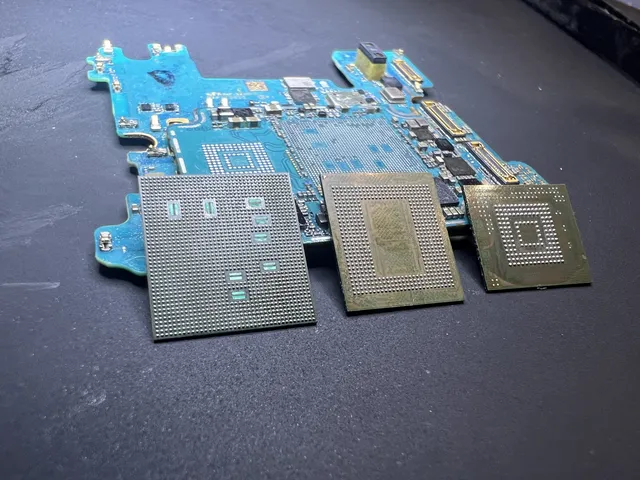
Catastrophic controller or board failure requiring physical removal of NAND flash chips. Chips are desoldered, read individually on specialized hardware, and data is reconstructed from raw NAND dumps.
- NAND chip desoldering and reading
- ECC error correction
- XOR/RAID interleave reconstruction
- Scrambler and encryption reversal
- Wear leveling table rebuild
Final price confirmed after diagnostic - no surprises.
Pricing
SSD Recovery Pricing in Denton Texas, TX
Understanding SSD data recovery pricing helps Denton residents and businesses make informed decisions when facing data loss. At MDRepairs, we believe in complete transparency with no hidden fees, no diagnostic charges, and a no-data-no-fee guarantee that protects you from paying for unsuccessful recovery attempts.
Logical recovery, covering accidental deletion, formatting, file system corruption, and partition table damage, ranges from $1,000 to $1,500. These are cases where the SSD hardware is functioning correctly but the data has been lost through user error, software issues, or operating system problems. The cost depends on the drive capacity, the amount of data to be recovered, and the complexity of the file system damage. For Denton residents who have accidentally formatted their SSD or deleted critical files, logical recovery offers the most affordable path to getting data back.
Firmware recovery ranges from $1,000 to $1,500 and covers cases where the SSD's internal firmware has become corrupted. This is the most common type of SSD failure, typically presenting as a drive that is not recognized by the computer, shows incorrect capacity, or enters a permanent busy state. Firmware recovery requires specialized tools to access the drive at a level below the normal operating system interface. The complexity of the firmware damage and the specific controller architecture determine the final price within this range.
Chip-off recovery, the most advanced and labor-intensive procedure, ranges from $1,500 to $2,000+. This is required when the SSD controller has completely failed and data must be read directly from the NAND flash memory chips. The process involves physically removing each chip, reading raw data from them, and reconstructing the original files by reverse-engineering the controller's data mapping algorithms. Chip-off recovery is priced based on the number of NAND chips, the complexity of the controller architecture, and the amount of data involved.
Compared to local repair shops in Denton, our pricing is competitive because we are the lab performing the work rather than a middleman adding markup. Many local computer shops in Denton that advertise data recovery send drives out to third-party labs, adding their own fee on top of the lab's charges. By shipping directly to MDRepairs, you eliminate the middleman markup and communicate directly with the engineers working on your drive.
Every recovery begins with our $100 professional diagnostic. We examine your SSD, determine the type and severity of the failure, and provide a firm, written quote before any work begins. There is no obligation to proceed, and we return your drive at no cost if you decline. We only charge if we successfully recover your data. This no-data-no-fee guarantee means Denton residents never pay for a failed recovery attempt.
SSD Data Recovery Turnaround Times
With standard service, we usually start your diagnostic in 4–6 weeks. Recovery takes additional time depending on what we find. If you need us sooner, we start the diagnostic within 5 to 7 days with Priority, within 1 to 2 days with Urgent, or the same day with Emergency. Rush service costs extra. Chip-off cases require additional time for NAND reading and data reconstruction.
-
4–6 weeks
Standard
No surcharge
We usually start the diagnostic in 4–6 weeks. Recovery time after that depends on your case.
-
5 - 7 days
Priority Rush
+$250
Diagnostic assessment starts within 5–7 days, ahead of the standard queue; confirm availability. Completion timing varies.
-
1 - 2 days
Urgent Rush
+$500
Diagnostic assessment starts within 1–2 days, ahead of the standard queue; confirm availability. Completion timing varies.
-
Same Day
Emergency
+$1,000
Diagnostic assessment starts same-day, ahead of the standard queue; confirm availability. Completion timing varies.
Rush windows cover the start of diagnostic assessment; confirm availability. They do not promise completed diagnosis or recovery. We usually start the diagnostic in 4–6 weeks. Recovery time after that depends on your case. Mail-in adds free 2nd-Day-Air UPS each way (USA, excluding islands).
What Affects SSD Recovery Time?
Once work starts, the failure type sets how long the recovery itself takes
-
Logical & Firmware
FastestAccidental deletion, formatting, corrupted partitions, and controller firmware/translator faults. No physical NAND work - typically the quickest turnaround once on the bench.
-
Controller Failure
ModerateA failed SSD controller blocks access to otherwise-healthy NAND. We use PC-3000 SSD and controller-specific firmware tools to restore communication and image the drive - more involved than a logical case, faster than full chip-off.
-
Chip-Off / NAND
LongestWhen the controller cannot be revived, we read the raw NAND directly - desoldering the chips, dumping each one, then reconstructing the data through XOR, ECC, and interleave de-scrambling. Chip-off cases need the most time for NAND reading and data reconstruction.
-
Shipping Time
Free · 2nd-day airMail-in ships free 2nd-Day-Air UPS both ways (USA, excluding islands) - you print the prepaid label right on the mail-in form. Local New Jersey customers who drop off at our Lincroft lab skip transit entirely.
Turnaround
SSD Recovery Turnaround in Denton Texas, TX
The total turnaround time for SSD data recovery from Denton, Texas, depends on three factors: shipping time to our lab, the diagnostic and recovery process, and return shipping of your recovered data. For most Denton cases, you can expect your data back within 5 to 10 business days from the time you drop your package at the post office.
USPS Priority Mail from Denton, TX, to our lab at 644 Newman Springs Road, Suite A, Lincroft, NJ 07738, typically takes 2 to 3 business days. This is the most cost-effective shipping option that provides both speed and tracking. Priority Mail Express is available for next-day delivery if your situation is urgent. UPS and FedEx are also options, though USPS Priority Mail generally offers the best balance of speed, cost, and reliability for SSD-sized packages from Texas to New Jersey.
Once your SSD arrives at our lab, the $100 professional diagnostic typically takes 1 to 3 business days. During this phase, our engineers determine the type of failure, assess the recovery prospects, and prepare a firm quote. For rush cases, we can perform same-day diagnostics upon request. We contact you with our findings and quote before proceeding with any recovery work.
The actual recovery process ranges from 1 to 5 business days depending on the complexity. Logical recoveries are often completed within 1-2 business days. Firmware repairs typically take 2-3 business days. Chip-off recoveries, being the most labor-intensive, may take 3-5 business days as each NAND chip must be individually read and the data reconstructed. We keep you updated throughout the process.
Return shipping of your recovered data, delivered on a new external drive or USB flash drive, takes another 2-3 business days via USPS Priority Mail back to Denton. We include the cost of the return shipping media in our recovery price. For faster return delivery, Priority Mail Express is available at an additional cost. We provide tracking information for both the incoming and outgoing shipments so you can monitor your drive's journey every step of the way.
Secure Mail-In SSD Recovery from Anywhere
We cover the UPS label and the trip home in the lower 48, except islands. With UPS 2nd Day Air, you can expect your SSD to reach our lab in Lincroft, New Jersey, by the end of the second business day after UPS gets your box (weekends and holidays don't count). Once it's here, we work on your SSD just as we would if you brought it to our counter.
- Free prepaid label (contiguous US), both ways
- UPS 2nd Day Air with tracking
- Real-time status updates
Free UPS labels cover the contiguous US. From Alaska, Hawaii or an island territory, arrange your own shipping; USPS is cheaper.
How Mail-In Works
- 1
Contact Us
Request a free quote. When you are ready, complete the mail-in form and generate a free prepaid UPS label right there (contiguous US).
- 2
Ship Your SSD
Pack your SSD securely in an anti-static bag and drop it at any UPS location. UPS 2nd Day Air shipping is free both ways in the contiguous US.
- 3
We Recover Your Data
Your SSD is diagnosed and recovered by our lead technician Joseph Montanti using PC-3000 SSD, chip-off equipment, and specialized NAND reading tools in our professional lab.
- 4
Data Returned
Your recovered data is shipped back on a new drive - free 2nd-Day-Air UPS, fast and secure, and verified before it leaves our lab.
Professional SSD Data Recovery Lab in Lincroft, NJ
Located at 644 Newman Springs Road, Suite A in Lincroft, Monmouth County, New Jersey - our lab is equipped with PC-3000 SSD, chip-off NAND extraction hardware, and controller-specific firmware tools. Walk-in drop-off available for local NJ customers.
Mail-In
Mail-In SSD Recovery from Denton Texas, TX
Shipping your SSD from Denton, Texas, to our data recovery lab is straightforward, safe, and the most cost-effective way to access professional SSD recovery services. SSDs are ideal candidates for mail-in recovery because they have no moving parts that can be damaged during shipping, unlike traditional hard drives with delicate mechanical components.
To ship your SSD, start by removing it from your computer if it is a removable drive. For 2.5-inch SATA SSDs, this typically involves removing a panel from the bottom of your laptop and unscrewing the drive. For M.2 drives, a single screw holds the module to the motherboard. If you are not comfortable removing the drive yourself, you can ship the entire laptop. If your SSD is soldered to the motherboard (common in newer MacBooks), ship the entire computer. We will extract what we need and return your hardware along with the recovered data.
Pack the SSD in an anti-static bag-these are the silver or pink bags that electronics are shipped in. If you do not have one, wrapping the drive in aluminum foil provides basic static protection. Surround the bagged drive with bubble wrap, at least two inches of padding on all sides. Place the wrapped drive in a small box (6x6x4 inches is ideal) and fill any gaps with packing material so nothing shifts during transit.
Include a note inside the box with your name, phone number, email address, and a brief description of what happened (for example, 'SSD stopped being detected after a power outage' or 'accidentally formatted the drive'). This information helps our engineers begin the evaluation process efficiently.
Ship to: MDRepairs, 644 Newman Springs Road, Suite A, Lincroft, NJ 07738. We recommend USPS Priority Mail with tracking as the best option from Denton. The flat-rate small box is often the most affordable option and includes tracking. Add insurance if the data is particularly valuable to you. Drop the package at any Denton post office or USPS collection point, and you should expect delivery in 2-3 business days.
Once we receive your drive, we will confirm receipt via email and begin the $100 professional diagnostic. You will receive a detailed assessment and firm quote before we proceed with any work. The entire process is designed to be simple, transparent, and secure for Denton residents.
Data Privacy & Chain of Custody
Your data is handled under strict chain-of-custody procedures from intake to secure destruction.
-
Intake Logging
Every SSD is photographed and logged with a unique case number, serial, model, controller type, and condition on arrival.
-
Restricted Access
Only your assigned technician handles your SSD. No shared workstations, no exceptions.
-
No Browsing Data
We never open or view your files. Integrity is verified through checksums and file structure only.
-
Secure Delivery
Data is transferred to a new drive and shipped back to you. We delete our offline copy after two weeks.
-
SSD Return or Destruction
Your original SSD is returned or securely destroyed per your instructions. Recovered data ships on new media.
Privacy & Security
How We Protect Your Data in Denton Texas, TX
Data security and privacy are fundamental concerns when shipping an SSD containing personal or business data from Denton to our lab. At MDRepairs, we implement strict security protocols throughout every stage of the recovery process to ensure your data remains confidential and protected.
During transit, your SSD is protected by the same USPS Priority Mail security infrastructure that handles government and financial documents daily. The data on your SSD cannot be accessed without specialized equipment even if the package were intercepted-a failed SSD that is not recognized by a standard computer is equally unreadable to anyone else. For additional security, USPS offers insurance and signature confirmation delivery options.
At our lab, every drive is assigned a unique case number and handled only by authorized engineers. We do not outsource recovery work to third parties-your SSD stays in our facility from arrival through completion. Our lab access is restricted to qualified personnel, and our workstations are isolated from external networks during the recovery process. We do not browse, review, or share the contents of recovered data beyond the minimum verification necessary to confirm successful recovery.
After recovery, your data is transferred to a new external drive or USB flash drive for return shipping. We do not retain copies of your recovered data after the return shipment has been delivered and confirmed. Our data retention policy includes secure deletion of all working copies within 30 days of case completion, ensuring that no trace of your data remains in our systems.
For Denton businesses handling sensitive data such as financial records, medical information, legal documents, or proprietary trade secrets, we can accommodate special handling requests including non-disclosure agreements and chain-of-custody documentation. Healthcare providers subject to HIPAA regulations and financial firms with compliance requirements can trust that our handling procedures meet their security standards.
The security of your data is not something we take lightly. From the moment your SSD arrives at our lab to the moment your recovered data is securely deleted from our systems, your information is treated with the confidentiality and professionalism it deserves. Denton residents can ship their SSDs with complete confidence that their data is in safe hands.
How It Works
What is SSD Data Recovery?
SSD data recovery is the process of extracting inaccessible, lost, or corrupted data from a solid state drive that has failed electronically, at the firmware level, or from NAND degradation - including completely dead SSDs that are not detected by your computer.
If you're searching for "SSD repair," what you most likely need is SSD data recovery - repairing the drive to a working state is rarely possible or advisable, but recovering the data from it almost always is.
Solid state drives store data electronically in NAND flash memory chips - there are no moving parts, no spinning platters, and no read/write heads. Instead, data is written to billions of individual flash cells organized into pages and blocks, managed by a controller chip that acts as the brain of the SSD. When the controller fails, firmware corrupts, or NAND cells degrade beyond their error correction threshold, your files become trapped inside the flash chips even though the data is physically still there.
SSD data recovery involves bypassing or replacing the failed controller logic to extract raw data from the NAND chips. This is fundamentally different from hard drive data recovery - there are no mechanical parts to swap. Instead, recovery requires electronic diagnostics, firmware-level intervention using PC-3000 SSD, or physical chip-off extraction where NAND chips are desoldered and read directly on specialized hardware.
I've been recovering data from failed SSDs since founding MDRepairs, and the most important thing I tell every customer is: your data is almost certainly still there. In the vast majority of cases, a dead SSD or a failed SSD has suffered a controller or firmware failure - the NAND flash chips that store your files are physically intact.
- Logical Deleted files, formatted partitions, corrupted file systems.
- Firmware & Controller SSD not detected, wrong capacity, read-only state, busy state.
- NAND-Level Cell degradation, uncorrectable bit errors, wear-out failure.
SSD failures are categorized into three types: logical (deleted files, formatted partitions, corrupted file systems), firmware and controller (SSD not detected, wrong capacity, read-only state, busy state), and NAND-level (cell degradation, uncorrectable bit errors, wear-out failure). The recovery approach depends entirely on which layer has failed - and attempting the wrong approach can make data permanently unrecoverable, especially on drives with TRIM enabled.
SSD data recovery can involve a failed controller or damaged firmware with the NAND flash chips still intact. For these failure types, we use PC-3000 SSD diagnostics and chip-off NAND extraction.
Call 732-933-7717 $100 diagnostic, credited toward a successful recovery.
The Basics
SSD Data Recovery in Denton Texas, TX, Explained
Solid-state drives have become the standard storage technology in Denton and across Texas, replacing traditional hard drives in everything from budget laptops to enterprise servers. Unlike hard drives with spinning magnetic platters and mechanical read/write heads, SSDs store data electronically on NAND flash memory chips. This design eliminates moving parts, making SSDs faster, lighter, and more resistant to physical shock, which is why virtually every new computer sold to Denton residents today comes with an SSD.
SSDs come in several form factors that Denton residents encounter. The most common is the 2.5-inch SATA SSD, which fits in the same bay as a traditional laptop hard drive and connects via a SATA cable. M.2 drives are smaller, stick-shaped modules that plug directly into the motherboard, and they come in both SATA and NVMe varieties. NVMe M.2 drives are significantly faster than SATA drives, using the PCIe bus for data transfer speeds that can exceed 7,000 MB/s in the latest Gen 5 models. Some workstations and gaming PCs use PCIe add-in card SSDs for maximum performance.
The internal architecture of an SSD includes the NAND flash memory chips where data is physically stored, a controller chip that manages all read and write operations, DRAM cache for performance optimization, and firmware that provides the intelligence for wear leveling, error correction, garbage collection, and TRIM processing. When any of these components fail, data can become inaccessible even though the raw data may still exist on the NAND chips.
Data recovery from SSDs is fundamentally different from hard drive recovery. With a hard drive, data recovery specialists can often repair or replace mechanical components to access the magnetic platters. With SSDs, recovery requires specialized knowledge of NAND flash architecture, controller firmware algorithms, and often the ability to read data directly from flash chips when the controller has failed. This specialized expertise is what separates professional data recovery labs like MDRepairs from general computer repair shops in Denton that may attempt software-only recovery approaches.
Understanding how your SSD stores data helps explain why professional recovery is so critical. The SSD controller constantly moves data around the NAND chips through a process called wear leveling, ensuring no single chip wears out faster than others. This means the physical location of your data is constantly changing, and only the controller's firmware mapping tables know where everything is. When those tables become corrupted, the data still exists on the chips but cannot be located without specialized reconstruction techniques.
Inside an SSD: Components That Fail
Understanding the internal architecture of a solid state drive explains why SSD failures are fundamentally different from hard drive failures - and why recovery requires entirely different tools and techniques.
-
NAND Flash Memory
The storage chips where your data physically lives. NAND cells hold electrical charges representing your data. When cells wear out or develop uncorrectable bit errors, data becomes inaccessible - requiring chip-off extraction to read the raw flash contents directly.
-
Controller
The processor that manages all SSD operations - wear leveling, garbage collection, TRIM, error correction, and the Flash Translation Layer (FTL) that maps logical addresses to physical NAND locations. Controller death is the most common SSD failure and the most complex to recover from.
-
DRAM Cache
Stores the Flash Translation Layer (FTL) mapping table that tells the controller where every piece of data is physically stored across the NAND chips. If the DRAM loses power before syncing to NAND, the mapping table can become corrupted - causing the SSD to appear empty or undetected.
-
PCB & Interface
The circuit board connecting the controller to your computer via SATA, NVMe (PCIe), or USB. Power surges and electrical damage can fry the interface circuitry while leaving NAND chips intact - making chip-off extraction the recovery path. SATA and NVMe interfaces require different diagnostic approaches.
-
Firmware & FTL
The internal software managing wear leveling, garbage collection, bad block management, and the critical Flash Translation Layer. FTL corruption means the controller can no longer locate your data across the NAND chips - the data exists but the map to find it is destroyed. PC-3000 SSD tools can reconstruct these tables.
-
Power Loss Protection Capacitors
Enterprise and high-end consumer SSDs include capacitors that provide enough power during unexpected shutdown to flush cached data from DRAM to NAND. Budget SSDs lack this protection - making them vulnerable to FTL corruption and partial write failures from sudden power loss.
Call 732-933-7717 Electronic diagnostics, firmware repair & chip-off NAND extraction.
SSD failing or not detected? Stop power-cycling it - each restart can push a dying controller past recovery.
Affirm financing, if eligibleWhat's Happening to Your SSD?
SSD failures present differently than hard drive failures - there's no clicking or beeping because there are no moving parts. Here are the most common symptoms and what they indicate about the underlying failure.
-
SSD Not Detected / Not Showing Up
Your computer doesn't see the SSD at all - the SSD is not showing up in BIOS, not recognized in Disk Management, or invisible in Device Manager. Whether your SSD is not showing up in BIOS after a power event or simply not recognized by Windows, this typically indicates controller failure, dead PCB components, or complete firmware corruption. The NAND chips almost certainly still contain your data.
Professional recovery required -
SSD Shows Wrong Capacity
Your 1TB SSD reports as 0MB, 8MB, or some other incorrect size. This is a telltale sign of firmware corruption - the controller has lost its configuration tables and has reverted to a raw or factory state. Data is intact but the SSD has lost the ability to present it.
Firmware-level repair needed -
SSD Read-Only or Write-Protected
The SSD is detected and data is visible, but you cannot write new data or delete files. The controller has entered a fail-safe mode because NAND cells have exceeded their endurance threshold. Your data is currently accessible but the SSD is dying - back up immediately before the controller locks further.
Back up now, recovery if locked -
SSD Suddenly Dead After Power Event
Power surge, lightning strike, plugged into a bad USB hub, or laptop battery died during write - now the SSD is completely unresponsive. Electrical damage typically destroys controller or interface circuitry while NAND chips survive intact. This is one of the most recoverable SSD failure types.
Chip-off likely needed -
Blue Screen Crashes & Freezing
Frequent BSODs with storage-related errors (KERNEL_DATA_INPAGE_ERROR, CRITICAL_PROCESS_DIED, PAGE_FAULT_IN_NONPAGED_AREA), random system freezes, or applications crashing during disk operations. The SSD's NAND is developing uncorrectable read errors that the controller's ECC engine cannot fix.
Degradation in progress -
Disappearing Files or Corrupted Data
Files randomly vanish, open as garbled data, or folders appear empty despite showing used space. This indicates FTL mapping table corruption, NAND cell degradation, or TRIM-related data destruction. Stop using the SSD immediately - every write operation can overwrite recoverable data.
Stop use immediately
Recognize your SSD's symptoms? Don't keep powering it on - every attempt can overwrite recoverable data. Get a free quote, or call 732-933-7717 to speak with a technician.
Symptoms
SSD Failure Symptoms We See in Denton Texas, TX
Recognizing SSD failure symptoms early can mean the difference between a straightforward recovery and permanent data loss for Denton residents. SSDs fail differently than hard drives. There are no clicking sounds, grinding noises, or other audible warnings because there are no moving parts. Instead, SSD failures tend to manifest through system behavior changes, error messages, and sudden unavailability.
The most alarming symptom is an SSD that simply disappears from your computer. The drive is not listed in BIOS, Disk Management, or Finder. Your computer may boot to a blank screen with a flashing cursor, a folder with a question mark (Mac), or a 'No Boot Device Found' message (Windows). This condition is typically caused by firmware corruption or controller failure, and it is one of the most common reasons Denton residents contact us for recovery.
Slow performance degradation is another warning sign. If your once-fast SSD has become noticeably sluggish, with long load times, freezing during file operations, or delayed application launches, the drive may be experiencing failing NAND cells or firmware issues. This degradation can accelerate rapidly, so it is wise to back up your data immediately and consider replacement if you notice significant performance drops.
Read-only mode is a safety mechanism built into many SSDs. When the drive detects that its NAND chips are approaching end-of-life or that write operations are failing, it may lock itself into read-only mode to preserve existing data. You can access your files but cannot save new data or modify existing files. This is actually a best-case failure scenario because your data is still accessible, but it signals imminent complete failure.
Blue Screen of Death (BSOD) errors on Windows or kernel panics on Mac that occur repeatedly during disk operations can indicate SSD failure. Errors like CRITICAL_PROCESS_DIED, UNMOUNTABLE_BOOT_VOLUME, or KERNEL_DATA_INPAGE_ERROR on Windows often point to failing storage. File system corruption, missing files, files that cannot be opened, and directories that show incorrect contents are additional warning signs.
Denton's extreme Texas climate plays a role in accelerating these symptoms. Denton experiences North Texas extremes with summer heat above 100°F, severe thunderstorms, and tornado threats. The city is in a particularly active tornado zone within the DFW region. Spring storms can produce damaging hail that knocks out power and damages electronics. The combination of heat and humidity during summer thunderstorm season stresses computer systems. The thermal stress from Texas heat can degrade NAND flash cells faster than their rated lifespan, while power surges from storm-related outages can corrupt firmware tables instantly. If you are experiencing any of these symptoms, the most important step is to stop using the drive immediately and contact a professional data recovery service before the condition worsens.
Types of SSD Failures We Recover
SSD failures are categorized by which layer of the drive architecture has failed. Each failure type requires a different recovery approach, different tools, and different levels of expertise.
- Hardware
Controller Death
The controller chip - the SSD's processor - has failed completely. The drive is not detected by any computer. This is the most common SSD failure. Recovery requires either replacing the controller with an identical model (rare and risky) or chip-off NAND extraction where each flash chip is physically removed, read on dedicated hardware, and the data reconstructed from raw dumps using the original controller's algorithms.
- Firmware
FTL (Flash Translation Layer) Corruption
The mapping table that translates logical block addresses to physical NAND locations has become corrupted - typically from unexpected power loss on SSDs without power loss protection capacitors. The SSD may show 0 bytes capacity, wrong model name, or enter an infinite busy loop. PC-3000 SSD can rebuild FTL tables from redundant metadata scattered across the NAND.
- Hardware
Power Surge Damage
Electrical spikes from lightning, faulty power supplies, or bad USB hubs destroy voltage regulators, controller circuitry, or interface components on the SSD's PCB. NAND flash chips are remarkably resilient to power surges because they store data as trapped electrical charges in insulated cells. Even when the PCB is visibly burned, chip-off extraction typically recovers the data from intact NAND.
- Firmware
Bad Block Management Failure
Every SSD tracks worn-out and defective NAND blocks in a bad block table. When this table corrupts or overflows, the controller can no longer safely map data around bad blocks and may lock the drive into a read-only or unresponsive state. Firmware-level repair involves rebuilding these tables using vendor-specific PC-3000 SSD protocols.
- Hardware
Interface Failure
The SATA or NVMe interface circuitry has failed while the controller and NAND remain functional. Common on M.2 drives that experience socket damage from improper installation or on SSDs in MacBooks with proprietary connectors. Recovery may involve PCB-level repair or chip-off extraction depending on the extent of the damage.
- Logical
Deleted Files & Formatting
Trying to recover deleted files from an SSD is more challenging than from a hard drive because of TRIM. When TRIM is enabled (default on all modern operating systems), the OS tells the SSD to erase deleted file blocks in the background - making those blocks permanently unrecoverable. Recovery success depends entirely on whether TRIM has already executed. If you need to recover deleted files from an SSD or recover data after formatting, act immediately and do not continue using the drive.
- Firmware
NAND Wear-Out & Cell Degradation
Every NAND flash cell has a finite number of program/erase (P/E) cycles - TLC cells endure roughly 1,000-3,000 cycles, QLC around 500-1,000. As cells degrade, the SSD's internal ECC (error correction code) compensates until errors exceed the correction threshold. At that point, data becomes unreadable through normal channels. Chip-off extraction with advanced ECC reconstruction can often recover data that the controller has given up on.
- Hardware
Encryption Complications
Most modern SSDs use hardware AES-256 encryption - all data written to NAND is encrypted by the controller using a key stored in a secure area. If the controller dies, the encryption key dies with it unless it can be preserved. Samsung SSDs and Apple T2/M-series MacBook drives are particularly affected. We also recover data from BitLocker-encrypted and FileVault-encrypted SSDs where the software encryption layer adds additional complexity on top of hardware encryption. Recovery must work through the original controller path to maintain the encryption chain.
- Hardware
Water & Liquid Damage
Spilled liquid, flood damage, or humidity exposure can corrode SSD PCB components, short-circuit the controller, or damage the interface connector - but NAND flash chips are remarkably resilient to liquid exposure because data is stored as trapped electrical charges inside sealed silicon cells. Even SSDs submerged in water can often be recovered through chip-off extraction after the NAND packages are cleaned and dried. Do not power on a water-damaged SSD - corrosion accelerates when electricity flows through wet circuitry.
- Hardware
Overheating & Thermal Failure
Sustained high temperatures cause NAND flash cells to lose charge retention faster, controller throttling to become permanent, and solder joints on BGA packages to develop micro-fractures. NVMe drives in poorly ventilated laptops and gaming PCs are especially vulnerable - the controller can reach 100C+ under sustained workloads. Thermal damage is cumulative and often presents as intermittent detection issues before complete failure. Recovery focuses on stabilizing the controller at reduced clock speeds to extract data before thermal shutdown.
Technical Deep Dive
Advanced Failure Modes by SSD Family
Different SSD controllers and NAND architectures fail in predictable, controller-specific ways. Our technicians maintain current expertise across every major SSD platform to maximize recovery success.
-
Samsung Elpis & Phoenix Controllers: Encryption Lock
Samsung 870 EVO, 980 PRO, and 990 PRO SSDs use Samsung's proprietary controllers with hardware AES-256 encryption enabled by default. When the controller fails, the encryption key becomes inaccessible - making chip-off extraction useless without first recovering the key from the controller's secure storage. PC-3000 SSD Samsung modules can extract the encryption metadata needed to decrypt the NAND contents after chip-off. See our guides on Samsung 860 EVO recovery and SATAFIRM S11 firmware failures for model-specific details.
-
Phison Controllers: Scattered FTL Architecture
Phison E12, E16, and E18 controllers (used in Sabrent Rocket, Corsair MP600, Kingston KC3000, and many other brands) distribute FTL metadata across multiple NAND chips in a proprietary pattern. When the FTL corrupts, reconstruction requires understanding Phison's specific interleaving algorithm and metadata layout. PC-3000 SSD's Phison module handles this, but chip-off cases require manual NAND dump assembly following Phison's page layout.
-
Silicon Motion Controllers: Sudden Death Syndrome
Silicon Motion SM2259, SM2262, and SM2263 controllers (used in Crucial MX500, ADATA, Team Group, and many budget SSDs) are known for sudden complete failure without warning - the SSD transitions from working perfectly to completely dead in a single power cycle. Recovery typically requires chip-off extraction because the controller failure is catastrophic and non-repairable.
-
SandForce Controllers: Compression Complications
Older SSDs using SandForce SF-2281 controllers (Kingston SSDNow, OCZ Vertex, many 2012-2016 era SSDs) used real-time data compression before writing to NAND. This means raw NAND dumps must be decompressed using SandForce's proprietary algorithm during chip-off recovery - without this decompression step, the recovered data appears as random noise.
-
Apple T2 & M-Series: Soldered Encrypted Storage
MacBook Pro, MacBook Air, and Mac mini models from 2018 onward use Apple's T2 or M-series chips with soldered NAND storage that is hardware-encrypted to the specific security chip. MacBook data recovery for these models requires repairing the logic board at the component level to restore the original encryption chain - chip-off extraction alone cannot recover the data because the NAND contents are encrypted and the key is locked to the Apple silicon.
-
QLC NAND Drives: Endurance-Related Failures
Budget SSDs using QLC (4 bits per cell) NAND - including Samsung 870 QVO, Crucial P3, and Intel QLC drives - store more data per cell at the cost of dramatically lower endurance. QLC cells endure roughly 500-1,000 write cycles versus 3,000+ for TLC. These drives fail earlier from cell degradation, and the narrower voltage margins make data reconstruction from degraded cells significantly more difficult during chip-off recovery.
Failure Types
How SSDs Fail, and How We Recover Them in Denton Texas, TX
SSD failures in Denton and across Texas fall into several categories, each requiring different recovery approaches. Understanding these failure types helps residents and businesses recognize what has happened and why professional recovery is necessary.
Firmware corruption is the most common SSD failure type, accounting for a significant portion of our Texas recoveries. The SSD's firmware manages the flash translation layer (FTL), which maps logical addresses used by the operating system to physical locations on the NAND chips. When the FTL becomes corrupted, typically from power loss during a write operation or a failed firmware update, the SSD cannot locate any of its stored data. The drive may appear as the wrong capacity, show 0 bytes, or not be detected at all. Recovery requires specialized tools to repair or reconstruct the firmware tables.
Controller failure occurs when the SSD's main processor chip dies, often from power surges, overheating, or manufacturing defects. The controller is the brain of the SSD, and without it, the NAND chips cannot be accessed through normal means. In Denton, controller failures are frequently caused by power surges during Texas thunderstorms and by thermal stress from the extreme heat. Recovery from controller failure may require chip-off techniques, where the NAND chips are physically removed and read directly.
NAND flash degradation happens as the SSD ages. Flash memory cells have a limited number of write cycles, typically ranging from 1,000 cycles for TLC/QLC NAND to 100,000 cycles for enterprise SLC NAND. As cells wear out, the SSD's error correction becomes increasingly strained until it can no longer compensate for the failing cells. This degradation is accelerated by the intense Texas heat in Denton, which adds thermal stress to the already-limited cell endurance. SSDs that are heavily used for write-intensive workloads in hot environments fail sooner.
Logical failures include accidental deletion, formatting, partition table corruption, and file system damage. These are recoverable if the TRIM command has not yet cleared the affected blocks. Denton residents should be aware that on modern SSDs with TRIM enabled, deleted files can be permanently erased within minutes of deletion. Powering off the device immediately is critical to preserve the data before TRIM executes.
Electrical damage from power surges, short circuits, and static electricity can destroy SSD controller chips and damage NAND flash. In Denton, the education, music, technology, healthcare, renewable energy sectors see this type of failure during summer storm season when lightning strikes and power grid fluctuations damage unprotected computer systems. Industrial environments with heavy electrical equipment can also generate power quality issues that stress SSD components.
Physical damage, while less common with SSDs than hard drives, can still occur. Liquid spills, extreme physical impact, fire damage, and flood damage can all affect SSD circuit boards and components. Given Denton's location in the North Texas region, water damage from storms and flooding is a realistic concern. SSDs are more resilient to water than hard drives, but prolonged submersion can corrode circuit board traces and damage components.
The specific industries in Denton, including education, music, technology, healthcare, renewable energy, each experience characteristic failure patterns. Businesses with heavy database workloads see more firmware corruption and NAND wear. Companies with field operations in the Texas heat encounter more thermal-related failures. Organizations without UPS protection lose more drives to power surge damage during storm season.
SSD Data Recovery Service by Manufacturer
We maintain controller-specific tooling and NAND reading capabilities for every major SSD manufacturer. Each brand uses different controllers, NAND architectures, and firmware implementations that require specialized knowledge for successful recovery.
- Most common in our lab
Samsung SSD Data Recovery
The most popular SSD brand globally and the most common in our lab. We recover data from the 860 EVO, 870 EVO, 870 QVO, 980, 980 PRO, 990 PRO, 990 EVO, T5, T7, and PM series enterprise drives. Samsung uses proprietary Elpis and Phoenix controllers with always-on AES-256 encryption, making controller failure recovery particularly challenging. Our PC-3000 SSD Samsung module can extract encryption metadata and reconstruct FTL tables specific to Samsung's firmware architecture. For catastrophic failures, our chip-off process preserves the encryption chain data needed to decrypt raw NAND contents.
Samsung Recovery Details - Silicon Motion controllers
Crucial / Micron SSD Data Recovery
We recover data from the Crucial MX500, BX500, P1, P2, P3, P3 Plus, P5 Plus, T500, and Micron enterprise drives (5300, 7300, 7400 series). Crucial consumer SSDs primarily use Silicon Motion controllers, which are prone to sudden death failure - working perfectly one moment and completely dead the next. The MX500 is one of our most frequently recovered SSDs. Micron enterprise drives use proprietary controllers with different firmware and recovery procedures. PC-3000 SSD has dedicated modules for both Silicon Motion and Micron controller architectures.
Crucial Recovery Details - WD & SanDisk NVMe
Western Digital SSD Data Recovery
We recover data from WD Blue SN570, SN580, WD Black SN770, SN850X, WD Green, WD Red SA500, My Passport SSD, and legacy SanDisk models (Ultra, Extreme, Extreme PRO, SSD Plus). Western Digital acquired SanDisk in 2016 and uses a mix of in-house and SanDisk-derived controllers. WD NVMe drives use proprietary controllers that require WD-specific PC-3000 SSD modules. SanDisk portable SSDs (Extreme, Extreme PRO) are popular for photography and videography - failures from drops and cable damage are common.
WD / SanDisk Recovery Details - Multiple third-party controllers
Kingston SSD Data Recovery
We recover data from Kingston A400, A2000, KC3000, NV1, NV2, FURY Renegade, and legacy HyperX models. Kingston uses a variety of third-party controllers - Phison, Silicon Motion, and historically SandForce - depending on the specific model and production run. This means the same model number can use different controllers in different batches, requiring careful identification before recovery. Our PC-3000 SSD platform covers all controller variants used across Kingston's lineup.
Kingston Recovery Details - PCIe / M.2 / U.2
NVMe & M.2 SSD Data Recovery
We provide M.2 SSD data recovery and NVMe data recovery for all solid state drives regardless of brand - M.2 2280, M.2 2230 (Steam Deck, Surface, compact laptops), and U.2 enterprise form factors. NVMe drives operate over the PCIe bus rather than SATA, requiring PCIe-specific diagnostic tools and interface hardware. Popular NVMe drives we recover include Samsung 980/990 PRO, WD Black SN850X, Sabrent Rocket, Corsair MP600, Kingston KC3000, SK Hynix P41, and Intel 670p/680p. NVMe failures from BIOS updates, secure erase gone wrong, and PCIe lane negotiation errors require specialized firmware-level intervention.
NVMe Recovery Details - Intel, SK Hynix, Sabrent & more
Other SSD Brands
We also recover data from Intel SSDs (660p, 670p, 680p, Optane, DC series), SK Hynix (P31 Gold, P41 Platinum), Sabrent (Rocket, Rocket Q, Rocket 4 Plus), Corsair (Force, MP series), ADATA (SU800, XPG), PNY, Team Group, Transcend, Lexar, and enterprise drives from Seagate (Nytro), Kioxia (Exceria), and HPE. Regardless of brand, every SSD recovery starts with identifying the specific controller and NAND configuration to determine the optimal recovery path.
By Manufacturer
SSD Brands We Recover in Denton Texas, TX
SSDs from every major manufacturer are used by Denton residents and businesses, and each brand has its own controller architecture, firmware design, and failure characteristics that affect the data recovery process.
Samsung is the world's largest SSD manufacturer and one of the most common brands we recover from Denton. Samsung's consumer SSDs, including the 860 EVO, 870 EVO, 870 QVO, 970 EVO Plus, 980 Pro, and 990 Pro, use Samsung's proprietary controllers and V-NAND flash. Samsung drives are generally reliable but can suffer from firmware bugs. The 980 Pro had known issues with rapid wear in early firmware versions. Samsung's enterprise drives use different controllers with power-loss protection that provides better data integrity during unexpected shutdowns.
Western Digital and SanDisk SSDs (WD owns SanDisk) are widely sold at Texas retailers including Best Buy on South Loop 288, computer shops near UNT campus on Fry Street, electronics retailers along University Drive. The WD Blue, WD Black, and SanDisk Ultra 3D are common consumer models. These drives use a mix of SanDisk-designed and Phison controllers. Recovery from WD and SanDisk drives requires understanding their specific firmware implementation, which differs from Samsung's proprietary approach.
Crucial SSDs, manufactured by Micron (one of the world's largest memory chip producers), are popular for their value pricing. The Crucial MX500, BX500, and P5 Plus are common in Denton. Crucial drives use Silicon Motion controllers, and their firmware architecture is well-understood by professional recovery engineers. Micron's NAND flash is also used in many other manufacturers' SSDs.
Kingston SSDs, including the A400, KC3000, and NV2, are popular budget options. Kingston uses various third-party controllers from Phison and Silicon Motion, and the specific controller can vary between production batches of the same model. This variability makes it important for recovery engineers to identify the exact controller variant before beginning firmware-level work.
Intel SSDs, now being transitioned to Solidigm (a SK Hynix subsidiary), have been widely used in enterprise and data center environments. Intel's consumer SSDs like the 670p and enterprise drives like the D5-P5530 use Intel-designed controllers with distinct firmware architectures. Enterprise Intel SSDs are common in Denton's education, music, technology, healthcare, renewable energy sector servers and workstations.
Apple uses custom SSDs in MacBooks, iMacs, and Mac Pro computers, often with proprietary controllers and connectors that make third-party recovery particularly challenging. Many Denton Mac users are surprised to learn that Apple itself does not offer data recovery services and that a specialized lab is required to recover data from failed Mac SSDs, especially those with T2 or M-series chip encryption.
DIY Recovery vs. Professional SSD Data Recovery
If you're wondering how to recover data from a failed SSD, some scenarios can be handled at home with software while others require professional lab work. Unlike hard drives, there is no middle ground - if the SSD's controller or firmware has failed, no software can help.
Safe to Try at Home
Only attempt these if your SSD is still detected in BIOS and Disk Management, you accidentally deleted files or formatted the drive, or the file system shows as RAW. SMART status should show no critical errors.
- Try a different cable, port, or enclosure. M.2 adapters, USB enclosures, and SATA cables fail more often than SSDs. Test with a known-good connection before assuming the SSD is dead.
- Check BIOS/UEFI before booting the OS. If the SSD appears in BIOS but not in Windows, the issue may be a driver, partition, or file system problem - not hardware failure.
- Use read-only recovery software on a detected SSD. If the SSD is recognized, tools like R-Studio, PhotoRec, or Disk Drill can scan for recoverable files. Success depends heavily on whether TRIM has already erased deleted blocks.
- Check SMART data with CrystalDiskInfo. Look at "Percentage Used" (wear indicator), "Reallocated NAND Block Count," and "Uncorrectable Error Count." Rising errors mean the SSD is degrading - back up immediately.
Do Not Do This
- Do not run TRIM manually or use disk optimization. Windows "Optimize Drives" sends TRIM commands to SSDs, permanently erasing deleted file blocks. Disable automatic optimization on any SSD you're trying to recover data from.
- Do not attempt a firmware update on a failing SSD. Firmware updates on a degraded SSD frequently brick the drive completely, converting a potentially recoverable situation into a chip-off case that costs 2-3x more.
- Do not run Secure Erase or factory reset. These commands instruct the SSD controller to cryptographically erase the encryption key, rendering all NAND contents permanently unrecoverable - even with chip-off extraction.
- Do not continue using the SSD after data loss. SSDs don't just overwrite deleted data during new writes - they also run garbage collection and wear leveling in the background, which can destroy recoverable data even when you're not actively writing files.
Stop - Call a Professional
If your SSD is not detected in BIOS, shows wrong capacity (0MB, 8MB), is locked in read-only mode, was damaged by power surge, liquid, or physical impact, failed after a firmware update or secure erase, is from a MacBook with T2/M-series chip, or SMART reports high uncorrectable errors - no software can help. The failure is at the controller, firmware, or hardware level, and recovery requires specialized tools like PC-3000 SSD or physical chip-off extraction.
DIY vs Pro
Why DIY SSD Recovery Usually Fails
When an SSD fails in Denton, the temptation to attempt do-it-yourself data recovery is understandable, but DIY attempts on SSDs carry significant risks that can permanently destroy your data. Understanding these risks helps Denton residents make informed decisions about how to handle SSD data loss.
The most dangerous DIY mistake is running data recovery software on the failed SSD itself. When you scan an SSD with recovery software, the software must read every sector of the drive, which can trigger the SSD's garbage collection and TRIM processes. These background processes can permanently erase data that would otherwise have been recoverable by a professional. Additionally, if the SSD has firmware corruption, forcing read operations can cause the firmware to further deteriorate, expanding the damage from a partial corruption to a complete failure.
Another common DIY approach is using disk repair utilities like CHKDSK (Windows) or Disk Utility First Aid (Mac). These tools are designed to repair file system structures, and they do so by writing new data to the drive. On a failing SSD, these write operations can overwrite the very data you are trying to recover. Never run repair utilities on an SSD that contains data you need to recover.
The TRIM issue deserves special emphasis for Denton residents attempting DIY recovery. On SSDs with TRIM enabled (which is the default on all modern operating systems), deleted files are marked for physical erasure by the drive's garbage collection. This can happen within minutes of deletion. Once TRIM has cleared a block, the data is gone permanently-no software, no matter how advanced, can recover data that has been physically erased from NAND flash cells. Professional recovery engineers know how to work with failed SSDs while minimizing TRIM exposure.
Firmware-level failures cannot be addressed by any consumer software. If your SSD is not detected by your computer, no DIY software tool can help because the operating system cannot communicate with the drive at all. These cases require specialized hardware tools that interface with the SSD at levels below the normal software stack, equipment that costs thousands of dollars and requires expert training to use.
Physical intervention-opening the SSD, touching the circuit board, or attempting to resolder components-can cause electrostatic discharge damage and contamination that makes professional recovery more difficult or impossible. SSDs contain sensitive electronic components that require proper ESD protection and specialized rework equipment to handle safely.
The bottom line for Denton residents is this: if your data is important enough that you are considering recovery, it is important enough to do it right. The cost of professional recovery is a fraction of the value of lost business data, irreplaceable photos, or academic research. DIY attempts that go wrong can turn a recoverable situation into a permanent loss.
Critical Concept
TRIM and Why It Changes Everything About SSD Recovery
TRIM is the single most important factor that separates SSD data recovery from hard drive data recovery - and understanding it can save your data.
On a traditional hard drive, deleting a file only removes the pointer to it - the actual data remains on the platters until something new overwrites it. This is why hard drive data recovery after deletion is typically straightforward and successful.
SSDs work differently. Because flash memory must erase an entire block before it can write new data to any page within that block, SSDs use a background process called garbage collection to pre-erase blocks that no longer contain valid data. TRIM is the command that the operating system sends to the SSD telling it which blocks are no longer in use - giving the controller permission to erase them during idle time.
On Windows 7 and later, macOS 10.10.4 and later, and all modern Linux distributions, TRIM is enabled by default. When you delete a file, the OS sends a TRIM command within seconds to minutes. Once the SSD's controller executes that TRIM command and garbage collection erases the blocks, the data is permanently and irrecoverably gone - no software, no chip-off extraction, and no lab in the world can recover it.
Hard drive
Deleted data lingers on the platters until overwritten - recovery after deletion is usually straightforward.
Solid state drive
TRIM tells the controller which blocks to pre-erase during idle time - so deleted data can vanish in seconds.
SSD Data Recovery vs. Hard Drive Data Recovery
Solid state drives and hard drives fail in fundamentally different ways, require different tools, and have different recovery success factors. Here's what you need to know.
Hard Drive Recovery
- Storage medium
- Magnetic platters with mechanical read/write heads. Data persists magnetically regardless of power state.
- Common failures
- Clicking heads, seized motors, scratched platters, PCB damage. Failures are audible and progressive.
- Recovery approach
- Physical component replacement (head swaps, motor transplants) on a clean bench, then sector-level imaging with PC-3000.
- Deleted file recovery
- Highly successful - data remains on platters until physically overwritten by new data. No TRIM equivalent exists.
- Encryption
- Rarely hardware-encrypted (except WD My Passport). Most drives store data unencrypted on platters.
SSD Recovery
- Storage medium
- NAND flash memory chips with electronic controller. Data is stored as trapped electrical charges.
- Common failures
- Controller death, firmware corruption, NAND wear-out, power surge damage. Failures are silent and often instantaneous.
- Recovery approach
- Firmware repair via PC-3000 SSD, or chip-off NAND extraction where chips are physically desoldered and read on dedicated hardware.
- Deleted file recovery
- Challenging - TRIM erases deleted blocks within seconds to minutes. Recovery success depends entirely on whether TRIM has executed.
- Encryption
- Almost always hardware-encrypted. AES-256 is standard on modern SSDs, complicating any recovery that bypasses the controller.
We cover the UPS label and the trip home in the lower 48, except islands. $100 diagnostic, credited toward a successful recovery. If we can't get any files back, there's no recovery fee.
Affirm financing, if eligible Warning Signs
Early Signs Your SSD Is Failing
When an SSD fails, the actions you take in the first few minutes and hours can determine whether your data is recoverable. Denton residents should be aware of these common mistakes that reduce or eliminate the chances of successful data recovery.
The most critical mistake is continuing to use the SSD after detecting a problem. Every additional power cycle, boot attempt, and file operation on a failing SSD risks further firmware corruption and triggers TRIM garbage collection that can permanently erase data. If your computer is not booting from the SSD, do not keep restarting it. If you notice missing files or unusual behavior, shut down immediately. The instinct to 'try one more time' is natural but destructive when dealing with SSD failures.
Running consumer data recovery software on the affected SSD is the second most common mistake. Programs like Recuva, Disk Drill, and TestDisk can be effective for simple hard drive recovery, but they can cause permanent damage to failing SSDs. These programs read every sector of the drive during scanning, which can destabilize corrupted firmware, trigger garbage collection, and cause controller failures to cascade into complete chip damage. If professional recovery is a possibility, do not scan the drive first.
Reformatting the SSD in an attempt to 'fix' it is irreversible. When you format an SSD, the operating system sends TRIM commands for the entire drive, instructing the SSD to erase all data blocks. Unlike a hard drive format which only deletes the file table, an SSD format physically erases the flash memory cells. This is one of the most devastating mistakes a user can make.
The 'freezer trick' is a hard drive-era myth that some Denton residents still attempt with SSDs. Placing a hard drive in the freezer could temporarily contract swollen platters or seized bearings, but SSDs have no moving parts. Freezing an SSD serves no purpose and can cause condensation damage to the circuit board when the drive returns to room temperature. In Texas, the extreme temperature differential between a freezer and the ambient heat makes condensation even more likely.
Taking the SSD to a general computer repair shop that does not specialize in data recovery is another common mistake. Well-meaning technicians may attempt firmware updates, reformats, or software scans that permanently damage the data. Ask specifically about SSD recovery capabilities before handing over your drive. If the shop does not have NAND flash chip readers and firmware repair tools, they are not equipped for true SSD recovery.
Prevention
How to Prevent SSD Data Loss
Preventing SSD data loss is always better than recovering from it, and Denton's extreme Texas climate makes prevention strategies especially important. These practical steps help protect your data from the environmental and usage-related threats that SSDs face in the North Texas region.
Maintain proper operating temperatures. SSDs are rated for operating temperatures between 0°C and 70°C (32°F to 158°F). In Denton, summer temperatures inside vehicles, garages, and non-air-conditioned spaces can far exceed this range. Never leave a laptop in a parked car during Texas summer. Ensure desktop computers have adequate ventilation and that case fans are functioning properly. Consider adding a small fan directed at your M.2 SSD if your motherboard does not include a heatsink, as NVMe drives generate significant heat during sustained operations.
Use an uninterruptible power supply (UPS) for desktop computers. Power surges and sudden outages during Texas thunderstorms are one of the leading causes of SSD firmware corruption in Denton. A UPS provides battery backup that allows your computer to shut down gracefully during power outages, protecting the SSD's firmware tables from the corruption that occurs during unexpected power loss. Even a basic UPS costing $50-100 provides essential protection for equipment worth many times more.
Implement the 3-2-1 backup strategy: maintain three copies of your important data, on two different types of media, with one copy stored offsite. For Denton residents, this might mean keeping your working files on your SSD, an automatic backup on an external hard drive, and a cloud backup through a service like Backblaze, Carbonite, or iDrive. Automated backup software ensures you do not have to remember to back up manually. The Texas climate makes offsite and cloud backups especially important-a flood, hurricane, or fire that destroys your computer would also destroy any local backup drives.
Monitor your SSD's health using manufacturer tools. Samsung Magician, Western Digital Dashboard, Crucial Storage Executive, and Kingston SSD Manager all provide SMART data that can warn you of impending failure. Watch for increasing error rates, declining available spare blocks, and high temperature readings. CrystalDiskInfo is a free third-party tool that monitors SMART data for any SSD brand. Replace your SSD proactively when health monitoring indicates significant wear.
Keep your SSD's firmware updated, but do so carefully. Manufacturers release firmware updates to fix bugs and improve reliability. However, always back up your data before applying a firmware update, as a failed update can brick the drive. Never update firmware during a storm or when power reliability is questionable.
Protect against surge damage with quality power strips that include surge protection ratings. Not all power strips provide surge protection-look for units with a joule rating of 1,000 or higher. For Denton homes and businesses, whole-house surge protection installed at the electrical panel provides the best defense against the lightning-induced surges common during Texas storm season.
Supported SSD Types & Form Factors
We recover data from every SSD form factor, interface, and protocol used in consumer and enterprise environments.
SATA SSDs (2.5-inch)
- Samsung
- 860 EVO, 860 PRO, 870 EVO, 870 QVO, 850 EVO, 850 PRO, 840 EVO, 840 PRO.
- Crucial / Micron
- MX500, BX500, MX300, MX200, M550, Micron 5300, 5400 enterprise series.
- Western Digital / SanDisk
- WD Blue SATA, WD Green, WD Red SA500, SanDisk SSD Plus, Ultra 3D, SanDisk X600.
- Kingston
- A400, KC600, UV500, HyperX Savage, HyperX Fury.
- Other SATA
- Intel 545s, ADATA SU800, PNY CS900, Transcend SSD230, Team Group, Lexar NS100.
NVMe & M.2 SSD Data Recovery
- Samsung NVMe
- 980, 980 PRO, 990 PRO, 990 EVO, 970 EVO Plus, 970 PRO, 960 EVO, PM9A1.
- Western Digital NVMe
- WD Black SN770, SN850X, SN770M (2230), WD Blue SN570, SN580, SN5000.
- Crucial NVMe
- P5 Plus, P3, P3 Plus, T500, T700, P2.
- Other NVMe
- Kingston KC3000, NV2, SK Hynix P41 Platinum, Sabrent Rocket, Corsair MP600, Intel 670p/680p, ADATA XPG.
External & Portable SSD Data Recovery
- Samsung Portable
- T5, T7, T7 Shield, T7 Touch, T9.
- SanDisk / WD Portable
- Extreme Portable SSD, Extreme PRO Portable, WD My Passport SSD.
- Apple / MacBook SSDs
- Apple proprietary SSD modules, T2/M-series integrated storage. MacBook recovery details
- M.2 2230 (Compact)
- Steam Deck, Microsoft Surface, Framework Laptop, Dell XPS compact SSDs - WD SN740, SN770M, Kioxia BG5.
- Gaming Console SSDs
- PS5 internal SSD, PS5 expansion NVMe, Xbox Series X/S internal storage, Steam Deck M.2 2230 SSD. We recover save files, game data, screenshots, and video captures from gaming console SSDs.
- Enterprise & Server SSDs
- Micron 5300/5400/7300/7400, Samsung PM series, Intel DC/Optane, Seagate Nytro, Kioxia PM6/PM7, HPE enterprise SSDs. We also handle SSD RAID arrays from servers and NAS devices.
- mSATA
- Legacy mSATA drives from older ultrabooks and embedded systems - Samsung 850 EVO mSATA, Crucial M500 mSATA, Intel 525.
Portable SSDs use the same NAND and controllers as internal models, just packaged in an external enclosure with a USB bridge chip. Sometimes the USB enclosure fails while the internal SSD is fine - we test for this during diagnostics before recommending a full recovery.
Real SSD Recovery Cases
Every recovery we perform is documented from intake through data delivery. Here are representative cases that illustrate the range of SSD failures we handle and the recovery methods we use.
- 100% recovered
Samsung 870 EVO 1TB Controller Death
- Symptoms
- SSD stopped being detected overnight. Not visible in BIOS, Device Manager, or Disk Management. No prior warning signs - was working normally the day before.
- Diagnosis
- Samsung Elpis controller failed completely. PCB power rails and NAND chips tested healthy. Controller unable to initialize, preventing any access to the Flash Translation Layer and stored data.
- Recovery
- Performed chip-off extraction: desoldered four Samsung NAND packages using BGA rework station, read each chip on a dedicated NAND reader, extracted Samsung encryption metadata from controller secure storage area, decrypted and reassembled raw dumps using Samsung-specific FTL reconstruction algorithms.
- Result
- Complete recovery - all files, folders, and directory structure intact. Over 800GB of client photography work recovered.
- 98.4% recovered
WD Black SN850X 2TB Power Surge Damage
- Symptoms
- Lightning strike caused power surge through gaming PC. SSD completely dead - not detected in BIOS. Visible burn marks on the M.2 connector end of the PCB.
- Diagnosis
- Surge destroyed voltage regulator ICs and the WD proprietary NVMe controller. NAND packages tested intact - flash cells retained their charge states. Encryption key located in controller OTP (one-time programmable) area needed extraction.
- Recovery
- Chip-off extraction of BiCS5 NAND packages. Recovered encryption key material from damaged controller using microprobe techniques. Decrypted and reconstructed 2TB of data from raw NAND dumps with WD-specific page layout and interleaving algorithms.
- Result
- 98.4% recovery - game saves, personal documents, and 400GB of video recordings. Minor file loss in sectors where NAND had marginal pre-existing wear.
- 100% recovered
Crucial MX500 500GB Firmware Corruption, 0MB Capacity
- Symptoms
- SSD detected in BIOS but reported 0MB capacity. Disk Management showed an uninitialized disk with 0 bytes. Customer had experienced an unexpected shutdown the previous day.
- Diagnosis
- Power loss during FTL metadata update corrupted the Silicon Motion SM2259 controller's mapping tables. The controller reverted to a factory-like state, losing all knowledge of where data was stored across the NAND.
- Recovery
- Used PC-3000 SSD Silicon Motion module to enter vendor mode, extracted raw FTL metadata from NAND system pages, rebuilt the translation table, and restored proper drive initialization. Full imaging completed without chip-off.
- Result
- 100% recovery - all data including 300GB of RAW photography files with intact directory structure.
- 100% recovered
Samsung 980 PRO 2TB Encryption Key Recovery
- Symptoms
- NVMe SSD intermittently disappeared from system, then stopped being detected entirely. Video editing workstation with active client projects and no recent backup.
- Diagnosis
- Samsung Elpis controller experiencing progressive failure - DRAM cache interface degrading. Controller entered safe mode but could not maintain stable communication. Hardware AES-256 encryption meant NAND contents were encrypted to this specific controller's key.
- Recovery
- Stabilized controller communication using PC-3000 SSD in safe mode at reduced clock speeds. Extracted encryption key material and FTL tables before controller failed completely. Completed full NAND image through the controller path, preserving encryption chain. No chip-off needed.
- Result
- 100% recovery - 1.8TB of 4K ProRes video footage, After Effects project files, and client deliverables. All file permissions and metadata preserved.
- 100% recovered
Kingston A2000 1TB Failed BIOS Update Brick
- Symptoms
- Customer attempted a firmware update through Kingston SSD Manager that interrupted during write. SSD became completely unresponsive - not detected by any system.
- Diagnosis
- Interrupted firmware write corrupted the Phison E12 controller's boot ROM. Controller unable to initialize, stuck in a pre-boot failure state. NAND contents intact but controller firmware partially overwritten.
- Recovery
- Used PC-3000 SSD Phison module to force the controller into factory mode, reflashed a clean firmware build matching the original version, then rebuilt FTL tables from NAND metadata. Controller restored to functional state with original data intact.
- Result
- 100% recovery - Windows installation, applications, documents, and game library fully intact with original folder structure.
- 100% recovered
SanDisk Extreme PRO Portable SSD Drop + USB Failure
- Symptoms
- Photographer dropped portable SSD on concrete at a wedding venue. USB-C connector physically damaged, SSD not detected on any computer or cable.
- Diagnosis
- Impact damaged the USB-C bridge board and cracked solder joints connecting the bridge chip to the internal NVMe SSD module. Internal NVMe SSD and NAND chips tested healthy - only the interface circuitry was damaged.
- Recovery
- Bypassed the damaged USB bridge entirely by removing the internal M.2 NVMe module and connecting it directly to PC-3000 SSD via a standard M.2 interface. Full imaging completed at native NVMe speeds.
- Result
- 100% recovery - 1.2TB of wedding photos (RAW + JPEG) with complete folder structure and metadata. Delivered same week due to straightforward interface bypass.
How to Prevent SSD Data Loss
SSDs are reliable, but they are not invincible. These practices significantly reduce your risk of catastrophic data loss from SSD failure.
-
Use a UPS or Surge Protector
Power surges and unexpected shutdowns are the leading cause of SSD firmware corruption. A UPS (uninterruptible power supply) protects against both - and allows your SSD's power loss protection capacitors to safely flush cached data during a power event.
-
Follow the 3-2-1 Backup Rule
Maintain three copies of important data on two different media types with one copy offsite. SSDs make excellent primary drives but should never be your only copy - controller failures are instantaneous and unpredictable. Use an external hard drive or cloud backup as your second copy.
-
Monitor SMART Health Data
Check your SSD's SMART data monthly using CrystalDiskInfo (Windows) or DriveDx (Mac). Watch "Percentage Used" (should be well under 100%), "Reallocated NAND Block Count" (should be low or zero), and "Available Spare" (should be above threshold). Replace the SSD when wear indicators approach their limits. Our guide to checking drive health covers SSD-specific SMART attributes in detail.
-
Keep Firmware Updated (Carefully)
Manufacturer firmware updates fix bugs and improve reliability - but only apply them when your system is stable and on reliable power. Never update firmware during a storm, on battery power, or on an SSD showing health warnings. A failed firmware update is one of the most common causes of complete SSD brick.
-
Don't Fill Your SSD Past 80%
SSDs need free space for wear leveling, garbage collection, and overprovisioning. Running an SSD at near-full capacity forces the controller to work harder, accelerates NAND wear, and increases the risk of FTL table corruption. Keep at least 15-20% of capacity free at all times.
-
Avoid Cheap Power Supplies & USB Hubs
Low-quality power supplies deliver dirty power with voltage spikes that damage SSD controllers over time. Budget USB hubs can also cause voltage irregularities for portable SSDs. Use a reputable PSU rated for your system's wattage and powered USB hubs for external SSDs.
Already experiencing symptoms? Call 732-933-7717 or get a free quote.
Why Us
Why Choose MDRepairs Over Local Denton Texas, TX Shops
When facing SSD data loss in Denton, Texas, you have several options to consider, and understanding the differences between them helps you make the best decision for your situation. The choices typically come down to local computer repair shops, national data recovery chains, online software solutions, and specialized mail-in data recovery labs like MDRepairs.
Local computer repair shops in Denton are convenient and often affordable for general PC services, but most lack the specialized equipment needed for true SSD data recovery. SSD recovery requires NAND flash chip readers costing $5,000 to $15,000, firmware repair software suites costing $3,000 to $10,000 per year, and hot air rework stations for chip-off procedures costing $2,000 to $5,000. Most local shops cannot justify this investment for an occasional recovery job. When a local shop accepts an SSD for recovery, they typically send it to a third-party lab, adding their own markup and extending the timeline without adding any technical value.
National data recovery chains with locations in the Denton area or broader Texas market offer walk-in convenience but come with significant drawbacks. These chains operate on volume, and your drive may sit in a queue for days before being evaluated. Their pricing structures often include non-refundable diagnostic fees ranging from $50 to $300. Some chains quote low initial prices but add charges for 'rush processing,' 'complex recovery,' or 'after-hours work' that inflate the final bill well beyond the original estimate. Read reviews carefully before committing to any chain recovery service.
Data recovery software downloaded from the internet can sometimes recover accidentally deleted files from a functioning SSD, but it carries significant risks as discussed in the DIY section. Software cannot address firmware corruption, controller failures, or physical damage. For simple accidental deletions where the SSD is otherwise working normally, software might work if used immediately before TRIM erases the data. For any other type of failure, software will not help and may make things worse.
MDRepairs offers Denton residents a different approach. As a specialized data recovery lab, we have the full range of professional equipment needed for every type of SSD recovery, from simple logical recoveries to complex chip-off procedures. Our mail-in model eliminates the overhead of retail storefronts, allowing us to offer competitive pricing while investing in the best recovery technology. When you ship directly to our lab, there is no middleman-your drive goes straight to the engineer who will recover your data.
Our $100 professional diagnostic means you know exactly what the recovery will cost before committing. Our no-data-no-fee guarantee means you only pay if we successfully recover your files. We provide transparent, fixed-price quotes with no hidden charges. For Denton businesses and individuals comparing their options, the direct-to-lab model consistently delivers the best combination of expertise, pricing, and accountability. The 2-3 day shipping time from Denton to our New Jersey lab is a small trade-off for access to specialized recovery capabilities that simply are not available locally.
When evaluating any data recovery provider for your Denton SSD, ask these questions: Do you perform the recovery in-house or send it out? What specific SSD recovery equipment do you have? Do you charge a diagnostic fee? Is there a no-data-no-fee guarantee? What is your experience with my specific SSD brand and model? The answers to these questions will quickly reveal whether you are dealing with a specialist or a generalist attempting to handle something beyond their capabilities.
Coverage
SSD Data Recovery in Texas
Looking for ssd data recovery elsewhere in Texas? View all ssd data recovery cities in Texas, or visit our main ssd data recovery page.
FAQ
SSD Data Recovery FAQ - Denton Texas, TX
How does SSD data recovery work for Denton, TX residents?
SSD data recovery for Denton, TX residents works through our secure mail-in process. You ship your failed SSD to our lab at 644 Newman Springs Road, Suite A, Lincroft, NJ 07738, where our engineers perform a $100 professional diagnostic. Unlike traditional hard drives with spinning platters, SSDs store data on NAND flash memory chips managed by a controller and firmware. Recovery requires specialized tools and expertise to interface directly with flash memory chips, reconstruct the flash translation layer, and extract data even when the controller has failed. We handle SATA SSDs, NVMe drives, M.2 modules, and USB flash-based storage from all major manufacturers. After diagnosis, we provide a firm quote with no obligation, and you only pay if we successfully recover your data.
What types of SSDs can you recover data from in Denton?
We recover data from every type of SSD used by Denton residents and businesses. This includes 2.5-inch SATA SSDs commonly found in laptops and desktop upgrades, M.2 SATA and M.2 NVMe drives used in modern laptops and desktops, PCIe add-in card SSDs found in workstations and gaming computers, mSATA drives from older ultrabooks, and enterprise-grade SSDs from servers and NAS devices. We work with all major manufacturers including Samsung, Western Digital, Crucial (Micron), Kingston, Intel, SK Hynix, SanDisk, Sabrent, and Corsair. Whether your SSD is from a MacBook, Dell, HP, Lenovo, or custom-built PC, we have the tools and expertise to recover your data.
How much does SSD data recovery cost for someone in Denton, TX?
SSD data recovery pricing for Denton, TX residents depends on the type and severity of the failure. Logical recoveries, which include accidental deletion, formatting, and partition corruption, typically range from $1,000 to $1,500. Firmware-level recoveries, where the SSD's internal firmware tables have become corrupted or the drive is not detected by the computer, range from $1,000 to $1,500. Chip-off recovery, which is required when the SSD controller has completely failed and data must be read directly from the NAND flash chips, ranges from $1,500 to $2,000+. We provide a $100 professional diagnostic and firm quote before any work begins. You only pay if we successfully recover your data. There are no hidden fees, bench fees, or diagnostic charges.
How long does SSD data recovery take from Denton, Texas?
Total turnaround time for SSD data recovery from Denton, Texas, typically ranges from 5 to 10 business days. This includes approximately 2-3 business days for USPS Priority Mail shipping from Denton to our lab in Lincroft, NJ, 1-3 business days for the $100 professional diagnostic, 1-5 business days for the actual recovery process depending on complexity, and 2-3 days for return shipping of your recovered data. Rush service is available for critical situations, which can compress the recovery timeline to 1-2 business days once the drive arrives at our lab. We keep you updated throughout the entire process via email and phone.
Is it safe to ship my SSD from Denton to your lab in New Jersey?
Yes, shipping your SSD from Denton to our lab is completely safe. SSDs have a significant advantage over traditional hard drives when it comes to shipping because they have no moving parts. There are no read/write heads, spinning platters, or delicate mechanical components that can be damaged by the normal handling of postal shipment. We recommend packing your SSD in an anti-static bag, wrapping it in bubble wrap, and placing it in a small box with packing material to prevent movement. Use USPS Priority Mail with tracking for the best combination of speed, reliability, and cost from Denton, TX to Lincroft, NJ 07738. We have received thousands of SSDs through the mail without a single shipping-related issue.
Why should Denton residents choose MDRepairs over local data recovery shops?
Most local computer repair shops in Denton and the surrounding Texas area do not have the specialized equipment needed for true SSD data recovery. SSD recovery requires NAND flash chip readers, firmware repair tools, and clean room facilities for chip-off procedures that cost tens of thousands of dollars. Local shops typically attempt software-only approaches or send the drive to a third party anyway, adding cost and delay. At MDRepairs, we are the lab, not a middleman. Your drive goes directly to our engineers who perform the work. We offer diagnostics with no obligation, a no-data-no-fee guarantee, and transparent pricing. Our specialized focus on data recovery means higher success rates than general computer repair shops that attempt recovery as a side service.
Can you recover data from a water-damaged SSD in Denton, Texas?
Yes, we can often recover data from water-damaged SSDs, which is particularly relevant for Denton residents who face risks from Texas storms, flooding, and hurricanes. SSDs are generally more resilient to water damage than traditional hard drives because they lack spinning platters that can be destroyed by moisture. However, water, especially floodwater containing contaminants, can corrode circuit board traces, short circuit components, and damage the SSD controller. The key is to not power on a water-damaged SSD, as applying electricity to corroded components can cause further damage. Instead, let the drive air dry, do not apply heat, and ship it to us for professional evaluation. Our engineers can clean corroded boards, repair damaged traces, and in many cases recover the data from the NAND flash chips directly.
What causes SSDs to fail in Denton's hot Texas climate?
The extreme Texas heat in Denton is a significant factor in SSD failures. SSDs have a rated operating temperature range, typically 0°C to 70°C (32°F to 158°F), and when internal temperatures exceed this range, the SSD controller may throttle performance, trigger thermal shutdown, or in severe cases, cause permanent damage to the controller chip. In Texas, vehicles, attics, garages, and non-air-conditioned spaces can reach temperatures of 140°F or higher during summer months. Laptops left in hot cars are especially vulnerable. Power surges during summer storms, brownouts from grid strain during heat waves, and sudden power loss when storms knock out electricity can all corrupt SSD firmware tables. Humidity and temperature cycling between air-conditioned interiors and extreme outdoor heat create condensation risk that can damage circuit boards.
What is the TRIM command and how does it affect SSD data recovery?
TRIM is a command that modern operating systems send to SSDs to inform them which data blocks are no longer in use. When you delete a file on an SSD, the operating system sends a TRIM command telling the SSD it can erase those blocks. The SSD's garbage collection process then physically zeros out those blocks to prepare them for new data. This is fundamentally different from traditional hard drives, where deleted data remains on the platters until overwritten. TRIM is why time is critical in SSD data recovery. Once TRIM has executed and the SSD has performed garbage collection, the deleted data may be permanently erased. If you have accidentally deleted files from your SSD, power off the device immediately and contact us. The sooner you act, the better the chances of recovery before TRIM eliminates the data. Denton residents should note that this is why we emphasize fast action when data loss occurs.
Do you offer emergency or rush SSD data recovery for Denton businesses?
Yes, we offer expedited and rush SSD data recovery services for Denton businesses that cannot afford extended downtime. Our rush service prioritizes your drive for immediate evaluation and recovery work upon arrival at our lab. While standard recovery takes 1-5 business days after diagnosis, rush service can reduce this to 1-2 business days for most cases. We recommend shipping via USPS Priority Mail Express for overnight delivery from Denton to our Lincroft, NJ lab. For critical business situations, we can begin diagnostic evaluation the same day your drive arrives and provide preliminary findings within hours. Rush fees apply and vary based on the complexity of the recovery, but we always provide a firm quote before proceeding. Contact us at the time of shipping so we can prepare for your drive's arrival.
Can you recover data from an SSD that is not recognized by the computer?
Yes, SSDs that are not detected by the computer's BIOS or operating system are one of our most common recovery scenarios. This condition is usually caused by firmware corruption, controller failure, or power surge damage. When an SSD's firmware tables become corrupted, the drive cannot map the physical NAND flash locations to logical data addresses, making it invisible to the computer. Our engineers use specialized tools to access the SSD at the firmware level, repair or reconstruct damaged firmware tables, and restore the drive's ability to present data to the host system. In cases where the controller itself has failed, we can perform chip-off recovery by removing the NAND flash chips and reading them directly. Denton residents commonly bring us SSDs that stopped being detected after power outages during Texas storms or after firmware update failures.
What should I do immediately when my SSD fails in Denton?
If your SSD fails in Denton, the most important step is to stop using it immediately. Do not attempt to restart your computer repeatedly, as each power cycle can cause additional firmware table corruption. Do not run data recovery software on the SSD itself, as this can trigger TRIM and garbage collection that permanently erase your data. Do not open the SSD or attempt physical repairs. Do not put it in the freezer-that is a myth from the hard drive era and can cause condensation damage to SSD circuit boards. Instead, power off the device, remove the SSD from your computer if possible, place it in an anti-static bag, and contact us for a free consultation. We will guide you through the packing and shipping process to get your drive to our lab safely. Time matters with SSD recovery, so act quickly.
Can you recover data from an encrypted SSD?
SSD encryption adds complexity to the recovery process, but recovery is often still possible depending on the encryption type and the nature of the failure. If the SSD uses hardware-based full-disk encryption (common in enterprise SSDs and some Samsung consumer drives), the encryption key is stored in the controller. If the controller has failed, the data on the NAND chips is encrypted and recovery depends on whether the controller can be repaired or the encryption key can be extracted. For software-based encryption like BitLocker, FileVault, or VeraCrypt, the data can usually be recovered if you have the encryption password or recovery key-the encryption is a software layer that can be decrypted after the raw data is recovered. We recommend that Denton residents who use encryption always maintain a copy of their recovery keys in a safe location separate from the encrypted drive.
How do I pack my SSD for shipping from Denton to your lab?
Proper packing ensures your SSD arrives safely at our lab from Denton. Start by placing the SSD in an anti-static bag-these are the silver or pink bags that electronics are shipped in. If you do not have one, wrap the drive in aluminum foil as an alternative. Wrap the bagged SSD in several layers of bubble wrap, securing with tape. Place the wrapped drive in a small box-a box roughly 6x6x4 inches is ideal. Fill any remaining space with packing peanuts, crumpled paper, or additional bubble wrap so the drive cannot shift during transit. Include a note with your name, phone number, email address, and a brief description of the issue. Seal the box securely and ship via USPS Priority Mail to: MDRepairs, 644 Newman Springs Road, Suite A, Lincroft, NJ 07738. Add tracking and consider insurance for peace of mind.
What is chip-off SSD data recovery?
Chip-off recovery is the most advanced form of SSD data recovery, used when the SSD controller has completely failed and cannot be repaired. In this procedure, our engineers physically desolder the NAND flash memory chips from the SSD's circuit board using specialized rework stations. Each chip is then read individually using a flash chip reader that can interface with the raw NAND data. The challenge is that SSDs scramble and distribute data across multiple chips using wear-leveling algorithms, encryption, and error correction codes. Our engineers must reverse-engineer the controller's data mapping scheme to reconstruct the original files from the raw chip dumps. This process requires intimate knowledge of different controller architectures from manufacturers like Phison, Silicon Motion, Marvell, and Samsung. Chip-off recovery typically ranges from $1,500 to $2,000+ and is the last resort when other methods fail, but it can recover data from even the most severely damaged SSDs.
Can you recover data from a MacBook SSD in Denton?
Yes, we specialize in MacBook SSD data recovery for Denton residents. Apple MacBooks have used various SSD configurations over the years, and each requires a different recovery approach. Older MacBooks (2012-2015) used removable proprietary SSDs with Apple's custom connector. Newer MacBooks (2016 and later) have SSDs soldered directly to the logic board, making traditional removal impossible and requiring specialized board-level recovery techniques. MacBook SSDs also use Apple's T2 security chip or M-series chip encryption, which adds complexity. We can recover data from MacBook Air, MacBook Pro, and iMac SSDs regardless of the configuration. If your MacBook shows a folder with a question mark icon, a prohibitory sign, or simply will not turn on, ship it to us for professional evaluation. We handle Apple's proprietary hardware daily.
Do power outages in Denton during Texas storms affect SSDs?
Yes, sudden power loss during Texas storms is one of the most common causes of SSD failure for Denton residents. When an SSD loses power unexpectedly, any data being written at that moment can be corrupted. More critically, the SSD's firmware mapping tables, which track where every piece of data is physically stored on the NAND chips, can be left in an inconsistent state. This can cause the SSD to become unrecognizable to the computer, show the wrong capacity, or enter a permanent read-only state. Enterprise SSDs have power-loss protection capacitors, but most consumer SSDs do not. To protect against power loss during Texas storms, use an uninterruptible power supply (UPS) for desktop computers, keep laptops charged, and shut down computers properly when severe weather is approaching. If your SSD has failed after a power outage, do not repeatedly try to boot from it-contact us for professional recovery.
What is the success rate for SSD data recovery?
SSD data recovery success depends entirely on the type of failure and the condition of the NAND flash memory chips. Logical failures such as accidental deletion, formatting, and partition corruption have the highest recovery rates when addressed quickly before TRIM and garbage collection erase the data. Firmware failures where the SSD is not detected by the computer also have strong recovery prospects because the underlying data on the NAND chips is usually intact. Controller failures may require chip-off recovery, which is more complex but still achievable in most cases. The factors that most reduce recovery chances are extensive TRIM execution after deletion, severe physical damage to the NAND chips themselves (rare), and continued use of the drive after the initial failure. The single most important thing Denton residents can do to maximize recovery chances is to stop using the SSD immediately when a problem occurs and contact a professional.
No question matches that - it's probably faster to just ask us: (732) 933-7717 or .
SSD Recovery Guides & Resources
Educational resources to help you understand SSD data recovery, make informed decisions, and protect your data.
How to Recover Data From an SSD
Our complete guide to SSD data recovery covers the differences between logical, firmware, and physical SSD failures, what recovery methods apply to each, when DIY software can help versus when professional lab work is required, and how TRIM affects your recovery chances. We explain the chip-off extraction process, controller-specific recovery approaches for Samsung, Phison, and Silicon Motion architectures, and how to maximize your recovery odds before shipping your SSD to a lab.
Recovering Data From a Dead SSD
When your SSD is completely undetected - not visible in BIOS, Disk Management, or any computer - it doesn't mean your data is gone. Our dead SSD recovery guide explains why most dead SSDs have failed at the controller or PCB level while NAND chips remain intact, what recovery methods are used (PC-3000 SSD firmware repair vs. chip-off extraction), how encryption affects dead SSD recovery, and what to do (and not do) before sending your SSD to a professional lab.
SSD Data Recovery Cost Guide
Our detailed SSD data recovery cost breakdown covers pricing for every failure type - logical recovery ($1,000 - $1,500), firmware and controller repair ($1,000 - $1,500), and chip-off NAND extraction ($1,500 - $2,000+). We compare SSD recovery costs to hard drive, phone, and other device recovery, explain what factors affect pricing, and detail our diagnostic process so you understand exactly what you're paying for.
NVMe SSD Data Recovery
NVMe SSDs use the PCIe bus rather than SATA, requiring different diagnostic interfaces and controller-specific knowledge. Our NVMe SSD data recovery page covers M.2 2280, M.2 2230 (compact form factor used in Steam Deck, Surface, and Dell XPS), and U.2 enterprise drives. We explain NVMe-specific failure modes including PCIe lane negotiation errors, thermal throttling failures, and BIOS update bricks that are unique to the NVMe protocol.
Partnership Program for IT Professionals
If you manage IT infrastructure or run a technology services business, our partnership program offers priority scheduling, volume pricing, and dedicated account management for SSD data recovery cases. As SSDs replace hard drives in business environments, SSD failures are becoming the most common recovery request from MSPs and IT departments. We handle the specialized controller diagnostics, chip-off extraction, and encrypted SSD recovery that most IT shops cannot perform in-house.
About MDRepairs
MDRepairs is a specialized data recovery lab based in Lincroft, New Jersey, serving customers nationwide through our mail-in program. Shipping is free both ways in the contiguous US. Our lab is equipped with ACE Laboratory PC-3000 (HDD and SSD modules), chip-off NAND extraction and reading equipment, a BGA rework station, and controller-specific firmware tools for Samsung, Phison, Silicon Motion, Marvell, SanDisk/WD, and Intel architectures. Every recovery is documented on camera and published on our YouTube channel with over 2 million subscribers - providing full transparency into our process, equipment, and results.
Can You Recover Deleted Files From an SSD?
Usually not. Our guide on recovering deleted files from an SSD explains how TRIM permanently erases deleted data within seconds, why this makes SSD deletion recovery fundamentally different from hard drive deletion recovery, and the rare exceptions where recovery might still work.
Other Data Recovery Services
Beyond SSD data recovery, MDRepairs provides professional data recovery services for a wide range of devices. We offer hard drive data recovery, NVMe SSD recovery, iPhone data recovery, Samsung Galaxy data recovery, cell phone data recovery for all brands, flash drive and USB recovery, SD card recovery, laptop data recovery, MacBook data recovery, iPad data recovery, and iPod data recovery.
Ready to recover your SSD data?
SSD Recovery Guides & Resources
These practical guides help Denton residents handle common SSD-related situations and make informed decisions about data recovery. Whether you are dealing with an active failure or preparing to prevent future data loss, these step-by-step instructions provide actionable guidance.
If your SSD just failed, follow this immediate response checklist: First, stop using the computer immediately. Do not restart, do not run repair utilities, and do not install recovery software. Second, if the SSD is in a desktop computer, shut down and disconnect power. If it is a laptop, hold the power button for 10 seconds to force shutdown, then do not reopen the laptop. Third, remove the SSD from the computer if possible. For a 2.5-inch SATA drive, unscrew the access panel and slide the drive out. For an M.2 drive, remove the single retaining screw and gently pull the module from its slot. Fourth, place the SSD in an anti-static bag and set it aside. Fifth, contact MDRepairs for a free consultation before taking any further action.
To check your SSD's health before failure occurs, download your manufacturer's monitoring software or the free CrystalDiskInfo utility. Run the software and look for these key indicators: Total Bytes Written (TBW) compared to the manufacturer's rated endurance, current temperature readings (should stay below 70°C during normal operation), reallocated sector count (should be zero or very low), and available spare percentage (should be above 10%). If any of these values are concerning, back up your data immediately and plan for drive replacement.
For Denton residents preparing to ship an SSD for recovery, create a detailed description of the failure for our engineers. Include: what you were doing when the failure occurred, any error messages displayed, whether the computer was affected by a power outage or surge, the brand and model of the SSD, the operating system you were using, and what data you most need recovered. This information helps our engineers prioritize their approach and can speed up the recovery process.
To set up proper backup protection going forward, consider these options suitable for Denton's climate and risk profile: For Windows users, enable File History to an external drive and set up OneDrive or Backblaze for cloud backup. For Mac users, configure Time Machine to an external drive and enable iCloud or Backblaze. For businesses, implement automated backup software like Veeam or Acronis with both local and cloud targets. Store at least one backup copy outside your Denton home or office to protect against flood, fire, and storm damage.
When choosing a replacement SSD, look for drives with power-loss protection (PLP), which includes capacitors that provide enough power to flush cached data to NAND during an unexpected shutdown. This feature is critical for Denton residents dealing with Texas storm season power outages. Samsung Pro-series drives, Western Digital Red SA500 NAS drives, and most enterprise SSDs include PLP. While more expensive than basic consumer SSDs, the added protection is worth the investment for critical data.
Related Services
More Data Recovery Services in Texas
MDrepairs offers professional data recovery for all device types. We serve Texas through our secure mail-in program with free shipping both ways (contiguous US).
Lost your data? We'll get it back.
$100 diagnostic, credited toward a successful recovery. If we can't get any files back, there's no recovery fee. We cover the UPS label and the trip home in the lower 48, except islands.