Lost my SSD after a hard reset and i thought the world ended. … I paid the rush fee and within 24 hours and a few extra minutes my business came back to life like tragedy never struck in the first place. They saved everything i thought i lost.
SSD Data Recovery in Visalia, CA
345 Google Reviews · 2M+ Followers · Nationwide Service
- $100 Flat Diagnostic
- Free Shipping (contiguous US)
Visalia, CA is an agriculture-driven community in California. When an SSD fails in this agriculture-driven community, the data stored on it does not have to be gone forever. MDRepairs provides professional SSD data recovery services for residents and businesses throughout Visalia and the surrounding California communities.
About this recovery service
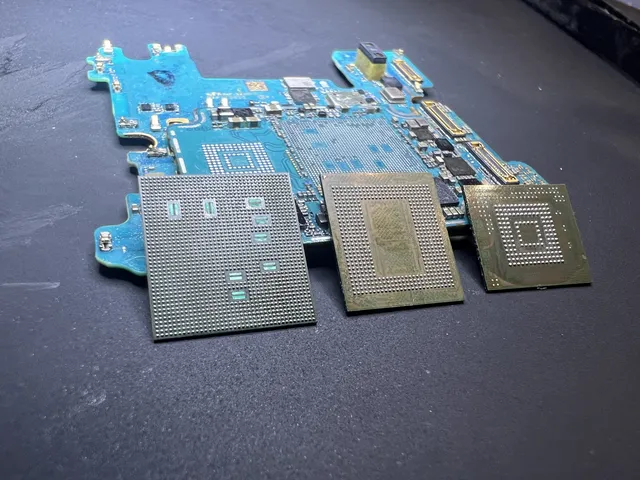
Whether you are a logistics and education professional whose laptop SSD stopped booting, or a Visalia resident with irreplaceable personal files on a failed drive, our lab in Lincroft, NJ has the specialized tools to recover your data. We use PC-3000 SSD hardware, chip-off equipment, and years of hands-on experience to handle recoveries that local shops in Visalia simply cannot perform.
- 4.6 Google rating
- from 345 Google reviews
- 2M+ Followers watching real recoveries
- $100 diagnostic, credited toward a successful recovery.
Local
SSD Data Recovery for Visalia, CA Residents
Visalia, California sits at the intersection of innovation and daily life, where logistics and education drive the local economy. The city's dependence on digital data has grown exponentially over the past decade, and with that growth comes an increasing need for professional SSD data recovery services. From small businesses running their operations on a single laptop to large enterprises managing terabytes of critical information, Visalia generates and stores an enormous volume of data every day.
Major employers in the Visalia area include logistics operations, medical centers, school districts. These organizations rely on SSDs in their workstations, servers, and portable devices to keep operations running smoothly. When an SSD fails at one of these companies, it can halt productivity and potentially result in the loss of proprietary data, client records, or years of research. The shift from traditional hard drives to SSDs has accelerated across Visalia's business landscape because SSDs offer faster boot times, lower power consumption, and improved durability under normal conditions. However, when an SSD does fail, the recovery process is fundamentally different from traditional hard drive recovery, requiring specialized tools and expertise that most local repair shops in Visalia do not possess.
Educational institutions and school districts throughout Visalia also contribute to the region's data landscape. Teachers, students, and administrators store lesson plans, student records, and administrative data on SSD-equipped devices. When these drives fail, the data loss can disrupt entire school operations. Many Visalia educators work on personal laptops that contain years of curriculum development, and an SSD failure can erase work that took a career to build.
The healthcare sector in Visalia is another area where SSD data recovery is critical. Medical practices, dental offices, chiropractic clinics, and independent practitioners throughout Visalia store patient records, imaging files, and billing data on SSDs. While HIPAA regulations require backups, the reality is that many small practices in Visalia have inadequate backup systems. When their primary SSD fails, they face not just data loss but potential regulatory complications. MDRepairs handles these cases with full confidentiality and can provide NDA documentation for healthcare clients.
Small businesses form the backbone of Visalia's economy, and they are often the most vulnerable to SSD data loss. A Visalia restaurant owner who loses their POS system data, a real estate agent whose listing photos and contracts disappear, or an accountant who loses client tax files right before April 15th - these are the everyday emergencies we handle. Unlike large corporations with IT departments and redundant storage systems, small businesses in Visalia frequently operate with a single point of failure: one SSD in one computer holding everything that matters.
The logistics, education, precision agriculture sectors in Visalia have all undergone rapid digital transformation. What used to be stored in filing cabinets now lives on SSDs. What used to be communicated on paper now exists only as digital files. This shift has made Visalia's economy more efficient but also more fragile when storage devices fail. The difference between an SSD and a traditional hard drive is significant when it comes to recovery: there are no spinning platters to read, no magnetic surfaces to image. SSD recovery requires understanding NAND flash architecture, controller firmware, wear leveling algorithms, and garbage collection processes. This level of expertise is what MDRepairs brings to every recovery case from Visalia.
Remote workers and freelancers in Visalia represent another growing segment of clients who need SSD recovery services. Since the pandemic, thousands of Visalia professionals work from home on laptops with SSDs as their only storage. Photographers, videographers, graphic designers, software developers, and content creators in Visalia all store their livelihoods on SSDs. When that drive fails and they discover their cloud backup was not working or only synced a fraction of their files, the need for professional recovery becomes urgent. MDRepairs serves Visalia's remote workforce with a streamlined mail-in process that minimizes downtime.
The legal and financial services sector in Visalia presents another critical area where SSD data recovery is essential. Law firms, accounting practices, insurance agencies, and financial advisory offices throughout Visalia store client files, case documents, financial records, and compliance documentation on SSDs. A failed SSD at a law firm could mean losing years of case files, depositions, and client correspondence. For accounting firms in Visalia, an SSD failure during tax season could be catastrophic. These professionals often handle sensitive data that carries regulatory obligations - losing it is not just inconvenient, it can have legal consequences. MDRepairs provides the confidential, professional recovery service that Visalia's legal and financial professionals require.
The construction and real estate industries in Visalia have also become heavily dependent on digital data stored on SSDs. Contractors store blueprints, permits, project timelines, and inspection records on laptops they carry to job sites. Real estate agents keep listing photos, contracts, client information, and transaction records on SSD-equipped devices. Property managers maintain tenant records, maintenance logs, and financial reports. When an SSD fails for these Visalia professionals, the impact extends beyond their own business - it can delay projects, stall transactions, and affect their clients' timelines. The portability that makes SSDs ideal for field work also exposes them to more physical stress, temperature extremes, and power fluctuations than a stationary desktop drive would experience.
The people we help
Our customers include people from
-

-

-
 AT&T
-
 Marriott
-

-

-
 Tennessee Titans
-

-

-

-

-

-

-

Reviews
What Our Customers Say
4.6
Start Here
What's happening with your drive?
Pick your device. You'll see what might be wrong, what to avoid, and whether it's urgent.
Mechanical - power it OFF now
SSDs die suddenly. The data usually has not.
Unlike hard drives, SSDs rarely warn you - a controller or firmware fault takes them from fine to invisible overnight. The NAND chips holding your data are usually intact; getting to them takes controller-level work, not software. Stop power-cycling it.
Mechanical - power it OFF now
That is firmware failure - a lab-only recovery.
An SSD showing up as "SATAFIRM S11," 0MB, or a few megabytes has crashed into its firmware safe mode. No consumer tool touches this. It is recoverable with the right controller tooling - and made worse by repeated reformat attempts.
Serious - stop using it
Could be the SSD failing mid-read.
When Windows or macOS starts crashing on a machine that was fine, a failing system SSD is a prime suspect - reads start timing out and the OS falls over. Do not reinstall the OS onto it; that overwrites the very data you want back.
Serious - stop using it
On SSDs, deleted files are a race against TRIM.
SSDs actively erase deleted space in the background (TRIM), so time matters more than on any hard drive. Power the machine down - fully off, not sleep - and get the drive evaluated. The sooner it stops idling, the more there is to recover.
Pricing
SSD Data Recovery Cost
SSD data recovery pricing depends on the failure type, SSD architecture, and recovery method required. Every case starts with a $100 diagnostic that is applied toward your recovery cost.
Every case starts here
We diagnose your device for $100 to find out what it would take to reach your files. That diagnostic fee goes toward the price of a successful recovery. If we can't get any files back, there's no recovery fee. The $100 diagnostic is non-refundable once diagnostics start, and donor drives or replacement parts you approve are non-refundable once ordered, even if recovery fails.
View our full data recovery pricing or read the complete SSD cost guide for detailed pricing by brand and failure type.
Logical Recovery
Accidental deletion, formatting, file system corruption, or partition damage on a functionally healthy SSD. Data is recovered through sector-level imaging and file carving techniques.
- Deleted file and folder recovery
- Formatted SSD data recovery
- NTFS, APFS, ext4, HFS+ reconstruction
- RAW partition recovery
Firmware & Controller Recovery
Most CommonSSD not detected, shows wrong capacity, or enters a busy/read-only state due to firmware corruption or controller malfunction. Requires PC-3000 SSD diagnostics and firmware-level intervention.
- Controller failure recovery
- Firmware table reconstruction
- Translator module repair
- Bad block management rebuild
- TRIM damage assessment
Chip-Off NAND Recovery
Catastrophic controller or board failure requiring physical removal of NAND flash chips. Chips are desoldered, read individually on specialized hardware, and data is reconstructed from raw NAND dumps.
- NAND chip desoldering and reading
- ECC error correction
- XOR/RAID interleave reconstruction
- Scrambler and encryption reversal
- Wear leveling table rebuild
Final price confirmed after diagnostic - no surprises.
Pricing
SSD Recovery Pricing in Visalia, CA
SSD data recovery pricing for Visalia, CA clients follows our transparent, tiered structure based on the complexity of the failure. We believe in upfront pricing with no hidden fees, and we provide a firm quote after our $100 professional diagnostic. Unlike many data recovery companies that advertise low starting prices and then inflate the final cost, MDRepairs gives Visalia clients the real price before any work begins. Our no-data, no-fee guarantee means you only pay if we successfully recover your files.
Logical recovery cases - where the SSD is physically functional but has file system corruption, accidental deletion, or partition damage - range from $1,000 to $1,500 for Visalia clients. These are typically the fastest recoveries, often completed within 2-5 business days. Many Visalia residents find our logical recovery pricing significantly lower than what national chains like DriveSavers or Ontrack charge for equivalent services, where the same recovery could cost several thousand dollars.
Firmware-level recoveries, where the SSD's internal software has become corrupted and the drive is inaccessible, range from $1,000 to $1,500. These cases require the PC-3000 SSD tool to access the drive's service area and repair firmware modules. This is the most common recovery type we perform for Visalia business clients, particularly those who have experienced power-related SSD failures. The investment is typically a fraction of what it would cost to recreate the lost data - if recreation is even possible.
Chip-off recovery, required when the SSD's controller is physically damaged and cannot be repaired, ranges from $1,500 to $2,000+. This involves physically removing the NAND flash chips from the SSD's circuit board, reading each chip individually using specialized equipment, and then reconstructing the data by reverse-engineering the controller's data mapping algorithms. Chip-off is the most labor-intensive and technically demanding recovery method, but it is often the last option for Visalia clients with critically important data on a physically damaged SSD.
For Visalia residents comparing our prices to local options, it is important to understand that most computer repair shops in Visalia cannot perform SSD recovery at all. They may offer to run software tools on your drive for $100-200, but these tools are useless against firmware and hardware failures. Worse, running software tools on a failing SSD can trigger TRIM operations that permanently erase your data. The few local shops that claim to offer SSD recovery typically send the drive to a third-party lab anyway, adding their own markup to the final price. By shipping directly to MDRepairs, Visalia clients eliminate the middleman and get the best price for professional recovery.
SSD Data Recovery Turnaround Times
With standard service, we usually start your diagnostic in 4–6 weeks. Recovery takes additional time depending on what we find. If you need us sooner, we start the diagnostic within 5 to 7 days with Priority, within 1 to 2 days with Urgent, or the same day with Emergency. Rush service costs extra. Chip-off cases require additional time for NAND reading and data reconstruction.
-
4–6 weeks
Standard
No surcharge
We usually start the diagnostic in 4–6 weeks. Recovery time after that depends on your case.
-
5 - 7 days
Priority Rush
+$250
Diagnostic assessment starts within 5–7 days, ahead of the standard queue; confirm availability. Completion timing varies.
-
1 - 2 days
Urgent Rush
+$500
Diagnostic assessment starts within 1–2 days, ahead of the standard queue; confirm availability. Completion timing varies.
-
Same Day
Emergency
+$1,000
Diagnostic assessment starts same-day, ahead of the standard queue; confirm availability. Completion timing varies.
Rush windows cover the start of diagnostic assessment; confirm availability. They do not promise completed diagnosis or recovery. We usually start the diagnostic in 4–6 weeks. Recovery time after that depends on your case. Mail-in adds free 2nd-Day-Air UPS each way (USA, excluding islands).
What Affects SSD Recovery Time?
Once work starts, the failure type sets how long the recovery itself takes
-
Logical & Firmware
FastestAccidental deletion, formatting, corrupted partitions, and controller firmware/translator faults. No physical NAND work - typically the quickest turnaround once on the bench.
-
Controller Failure
ModerateA failed SSD controller blocks access to otherwise-healthy NAND. We use PC-3000 SSD and controller-specific firmware tools to restore communication and image the drive - more involved than a logical case, faster than full chip-off.
-
Chip-Off / NAND
LongestWhen the controller cannot be revived, we read the raw NAND directly - desoldering the chips, dumping each one, then reconstructing the data through XOR, ECC, and interleave de-scrambling. Chip-off cases need the most time for NAND reading and data reconstruction.
-
Shipping Time
Free · 2nd-day airMail-in ships free 2nd-Day-Air UPS both ways (USA, excluding islands) - you print the prepaid label right on the mail-in form. Local New Jersey customers who drop off at our Lincroft lab skip transit entirely.
Turnaround
SSD Recovery Turnaround in Visalia, CA
Turnaround time for SSD data recovery cases from Visalia, CA includes transit time plus diagnostic and recovery time at our lab. Using USPS Priority Mail, packages from Visalia typically reach our lab in Lincroft, NJ within 3-4 days. We also accept FedEx and UPS shipments if you prefer a specific carrier. Once your SSD arrives at our lab at 644 Newman Springs Road, Suite A, Lincroft, NJ 07738, we begin the diagnostic evaluation within one business day.
Our standard diagnostic evaluation takes 1-2 business days and is completely free for Visalia clients. During this evaluation, we determine the type of failure, assess the likelihood of successful recovery, and provide you with a firm price quote. We then wait for your approval before performing any recovery work. This protects Visalia clients from surprise charges and ensures full transparency throughout the process.
Recovery time after diagnostic approval depends on the complexity of the case. Logical recoveries typically take 2-5 business days. Firmware repairs take 3-7 business days. Chip-off recoveries, being the most complex, can take 7-14 business days. For Visalia clients with urgent needs, we offer an expedited service option that prioritizes your case in our recovery queue. Most Visalia clients receive their recovered data within 7-10 business days from the time they ship their SSD, including transit time.
We return recovered data to Visalia clients on a new external drive or USB flash drive, shipped via USPS Priority Mail with tracking and insurance. The return shipment from Lincroft, NJ to Visalia, CA typically takes 3-4 days. We keep a copy of your recovered data on our secure servers for 30 days after delivery, giving you time to verify all files before we permanently delete our copies. For Visalia clients who need their data faster, we can also provide a secure download link for smaller recoveries while the physical drive is in transit.
Secure Mail-In SSD Recovery from Anywhere
We cover the UPS label and the trip home in the lower 48, except islands. With UPS 2nd Day Air, you can expect your SSD to reach our lab in Lincroft, New Jersey, by the end of the second business day after UPS gets your box (weekends and holidays don't count). Once it's here, we work on your SSD just as we would if you brought it to our counter.
- Free prepaid label (contiguous US), both ways
- UPS 2nd Day Air with tracking
- Real-time status updates
Free UPS labels cover the contiguous US. From Alaska, Hawaii or an island territory, arrange your own shipping; USPS is cheaper.
How Mail-In Works
- 1
Contact Us
Request a free quote. When you are ready, complete the mail-in form and generate a free prepaid UPS label right there (contiguous US).
- 2
Ship Your SSD
Pack your SSD securely in an anti-static bag and drop it at any UPS location. UPS 2nd Day Air shipping is free both ways in the contiguous US.
- 3
We Recover Your Data
Your SSD is diagnosed and recovered using PC-3000 SSD, chip-off equipment, and specialized NAND reading tools in our professional lab.
- 4
Data Returned
Your recovered data is shipped back on a new drive - free 2nd-Day-Air UPS, fast and secure, and verified before it leaves our lab.
Professional SSD Data Recovery Lab in Lincroft, NJ
Located at 644 Newman Springs Road, Suite A in Lincroft, Monmouth County, New Jersey - our lab is equipped with PC-3000 SSD, chip-off NAND extraction hardware, and controller-specific firmware tools. Walk-in drop-off available for local NJ customers.
Mail-In
Mail-In SSD Recovery from Visalia, CA
Shipping your SSD from Visalia, CA to our lab is simple and safe when you follow these steps. Proper packaging is critical to prevent any additional damage during transit, and the right shipping method ensures your drive arrives quickly and can be tracked throughout the journey.
Step one: Remove the SSD from your computer if it is an internal drive. For Visalia residents who are uncomfortable removing the drive themselves, any local computer shop can remove it for a small fee. If you have a laptop with a non-removable SSD (such as newer MacBooks), contact us first to discuss whether shipping the entire laptop is necessary. For external SSDs, simply disconnect the drive from any cables.
Step two: Place the SSD in an anti-static bag. This is the metallic-looking bag that your SSD came in when new. If you no longer have the original bag, anti-static bags are available at any electronics store in Visalia or can be ordered online. In a pinch, wrapping the SSD in aluminum foil provides basic static protection, though an anti-static bag is preferred. Do not use regular plastic bags, as they can generate static electricity that may damage the SSD's components.
Step three: Wrap the bagged SSD in bubble wrap - at least two inches of padding on all sides. Place it in a small box with additional packing material to prevent movement. The SSD should not be able to shift or rattle inside the box. While SSDs are more resistant to impact than hard drives, the circuit board components can still be damaged by rough handling during transit.
Step four: Ship via USPS Priority Mail from any post office in Visalia. Our shipping address is: MDRepairs, 644 Newman Springs Road, Suite A, Lincroft, NJ 07738. Priority Mail includes tracking and up to $100 in insurance. We recommend adding additional insurance for valuable data. UPS and FedEx are also accepted. Include a note inside the package with your name, phone number, email address, and a brief description of what happened to the SSD and what files you need recovered. Once shipped, email us your tracking number and we will watch for its arrival.
Data Privacy & Chain of Custody
Your data is handled under strict chain-of-custody procedures from intake to secure destruction.
-
Intake Logging
Every SSD is photographed and logged with a unique case number, serial, model, controller type, and condition on arrival.
-
Restricted Access
Only your assigned technician handles your SSD. No shared workstations, no exceptions.
-
No Browsing Data
We never open or view your files. Integrity is verified through checksums and file structure only.
-
Secure Delivery
Data is transferred to a new drive and shipped back to you. We delete our offline copy after two weeks.
-
SSD Return or Destruction
Your original SSD is returned or securely destroyed per your instructions. Recovered data ships on new media.
Privacy & Security
How We Protect Your Data in Visalia, CA
Data security is a top priority for Visalia, CA clients shipping their SSDs to our lab. We understand that the data on your SSD may include sensitive personal information, proprietary business documents, financial records, medical data, or legal files. MDRepairs has implemented comprehensive security protocols to protect your data throughout the entire recovery process.
During transit from Visalia to our lab, we recommend using a shipping method with tracking and insurance. USPS Priority Mail, FedEx, and UPS all provide tracking that lets you monitor your SSD's journey from Visalia to Lincroft, NJ. For Visalia clients with particularly sensitive data, we recommend requiring a signature upon delivery and purchasing additional shipping insurance for peace of mind.
At our lab, your SSD is assigned a unique case number and handled only by our trained recovery technicians. We do not outsource any recovery work to third parties - everything is done in-house at our Lincroft, NJ facility. Your data is stored on encrypted recovery servers that are not connected to the internet. Only the technician working on your case has access to your recovered files. We do not browse, copy, share, or analyze any recovered data beyond what is necessary to verify a successful recovery.
For Visalia businesses and professionals who require formal confidentiality agreements, we offer a non-disclosure agreement (NDA) that can be signed before any work begins. This is common for Visalia clients in legal, medical, financial, and technology fields where data privacy is regulated by law. Our NDA covers the entire recovery process from receipt of the drive to return of the recovered data and final deletion of all copies.
After your recovered data has been returned to you in Visalia and you have confirmed that all files are intact, we retain a backup copy on our secure servers for 30 days. This retention period protects Visalia clients in case the return drive is damaged in transit or a file is discovered to be missing. After 30 days, all copies of your data are permanently and securely deleted from our systems using multi-pass overwrite methods that meet Department of Defense standards.
How It Works
What is SSD Data Recovery?
SSD data recovery is the process of extracting inaccessible, lost, or corrupted data from a solid state drive that has failed electronically, at the firmware level, or from NAND degradation - including completely dead SSDs that are not detected by your computer.
If you're searching for "SSD repair," what you most likely need is SSD data recovery - repairing the drive to a working state is rarely possible or advisable, but recovering the data from it almost always is.
Solid state drives store data electronically in NAND flash memory chips - there are no moving parts, no spinning platters, and no read/write heads. Instead, data is written to billions of individual flash cells organized into pages and blocks, managed by a controller chip that acts as the brain of the SSD. When the controller fails, firmware corrupts, or NAND cells degrade beyond their error correction threshold, your files become trapped inside the flash chips even though the data is physically still there.
SSD data recovery involves bypassing or replacing the failed controller logic to extract raw data from the NAND chips. This is fundamentally different from hard drive data recovery - there are no mechanical parts to swap. Instead, recovery requires electronic diagnostics, firmware-level intervention using PC-3000 SSD, or physical chip-off extraction where NAND chips are desoldered and read directly on specialized hardware.
I've been recovering data from failed SSDs since founding MDRepairs, and the most important thing I tell every customer is: your data is almost certainly still there. In the vast majority of cases, a dead SSD or a failed SSD has suffered a controller or firmware failure - the NAND flash chips that store your files are physically intact.
- Logical Deleted files, formatted partitions, corrupted file systems.
- Firmware & Controller SSD not detected, wrong capacity, read-only state, busy state.
- NAND-Level Cell degradation, uncorrectable bit errors, wear-out failure.
SSD failures are categorized into three types: logical (deleted files, formatted partitions, corrupted file systems), firmware and controller (SSD not detected, wrong capacity, read-only state, busy state), and NAND-level (cell degradation, uncorrectable bit errors, wear-out failure). The recovery approach depends entirely on which layer has failed - and attempting the wrong approach can make data permanently unrecoverable, especially on drives with TRIM enabled.
SSD data recovery can involve a failed controller or damaged firmware with the NAND flash chips still intact. For these failure types, we use PC-3000 SSD diagnostics and chip-off NAND extraction.
Call 732-933-7717 $100 diagnostic, credited toward a successful recovery.
The Basics
SSD Data Recovery in Visalia, CA, Explained
SSD data recovery is the process of retrieving data from a solid-state drive that has become inaccessible due to logical failure, firmware corruption, electrical damage, or physical component failure. Unlike traditional hard drives that use spinning magnetic platters and a read/write head, SSDs store data on NAND flash memory chips controlled by a sophisticated microcontroller. This fundamental difference means that the techniques used to recover data from a hard drive are completely irrelevant when it comes to SSD recovery. For Visalia residents and businesses, understanding this distinction is the first step toward getting your data back.
Modern SSDs come in several form factors that are common among Visalia users. The 2.5-inch SATA SSD is the most widely used, found in desktop computers, older laptops, and external enclosures throughout Visalia homes and offices. These drives use the SATA interface and are popular upgrades for older systems. M.2 SSDs are thinner and smaller, designed for modern laptops and ultrabooks. They connect directly to the motherboard and come in both SATA and NVMe variants. NVMe SSDs are the fastest option, using the PCIe bus for dramatically higher speeds. Many Visalia professionals in logistics rely on NVMe drives for their speed advantages, but this same architecture creates unique recovery challenges when failures occur.
When an SSD fails in Visalia, the symptoms are often different from a hard drive failure. There is no clicking noise, no grinding sound, no physical warning. The drive may simply stop being recognized by the computer, show up with zero capacity, display I/O errors, or cause the system to freeze during boot. In some cases, the SSD may still appear in BIOS but refuse to mount as a drive in the operating system. These behaviors are caused by controller failures, NAND chip degradation, firmware corruption, or damaged components on the SSD's circuit board. Each failure type requires a different recovery approach, and attempting the wrong approach can make the data permanently unrecoverable.
At MDRepairs, we handle all SSD form factors and failure types for Visalia clients. Our lab is equipped with the PC-3000 SSD by ACE Lab, which is the industry standard for professional SSD recovery. This tool allows us to communicate directly with the SSD's controller, read raw NAND data, rebuild translation tables, and extract data even from drives that appear completely dead. For the most severe cases - where the controller and firmware cannot be repaired - we perform chip-off recovery. This involves physically removing the NAND flash chips from the SSD, reading them individually, and reconstructing the data using specialized software. It is a painstaking process, but it is often the last chance to recover data from a severely damaged SSD, and it is a service that no repair shop in Visalia can offer.
One important concept for Visalia SSD users to understand is the flash translation layer, or FTL. The FTL is a critical component of every SSD's firmware that maps logical addresses (what your computer sees) to physical NAND locations (where data actually resides on the chips). When an SSD fails, the FTL mapping can become corrupted, meaning the controller no longer knows where your files are physically stored, even though the data itself may be perfectly intact on the NAND chips. Rebuilding the FTL is one of the most complex aspects of SSD recovery and requires intimate knowledge of the specific controller's algorithms. This is why generic software tools fail - they cannot interpret the proprietary FTL structures used by different SSD manufacturers.
Inside an SSD: Components That Fail
Understanding the internal architecture of a solid state drive explains why SSD failures are fundamentally different from hard drive failures - and why recovery requires entirely different tools and techniques.
-
NAND Flash Memory
The storage chips where your data physically lives. NAND cells hold electrical charges representing your data. When cells wear out or develop uncorrectable bit errors, data becomes inaccessible - requiring chip-off extraction to read the raw flash contents directly.
-
Controller
The processor that manages all SSD operations - wear leveling, garbage collection, TRIM, error correction, and the Flash Translation Layer (FTL) that maps logical addresses to physical NAND locations. Controller death is the most common SSD failure and the most complex to recover from.
-
DRAM Cache
Stores the Flash Translation Layer (FTL) mapping table that tells the controller where every piece of data is physically stored across the NAND chips. If the DRAM loses power before syncing to NAND, the mapping table can become corrupted - causing the SSD to appear empty or undetected.
-
PCB & Interface
The circuit board connecting the controller to your computer via SATA, NVMe (PCIe), or USB. Power surges and electrical damage can fry the interface circuitry while leaving NAND chips intact - making chip-off extraction the recovery path. SATA and NVMe interfaces require different diagnostic approaches.
-
Firmware & FTL
The internal software managing wear leveling, garbage collection, bad block management, and the critical Flash Translation Layer. FTL corruption means the controller can no longer locate your data across the NAND chips - the data exists but the map to find it is destroyed. PC-3000 SSD tools can reconstruct these tables.
-
Power Loss Protection Capacitors
Enterprise and high-end consumer SSDs include capacitors that provide enough power during unexpected shutdown to flush cached data from DRAM to NAND. Budget SSDs lack this protection - making them vulnerable to FTL corruption and partial write failures from sudden power loss.
Call 732-933-7717 Electronic diagnostics, firmware repair & chip-off NAND extraction.
SSD failing or not detected? Stop power-cycling it - each restart can push a dying controller past recovery.
Affirm financing, if eligibleWhat's Happening to Your SSD?
SSD failures present differently than hard drive failures - there's no clicking or beeping because there are no moving parts. Here are the most common symptoms and what they indicate about the underlying failure.
-
SSD Not Detected / Not Showing Up
Your computer doesn't see the SSD at all - the SSD is not showing up in BIOS, not recognized in Disk Management, or invisible in Device Manager. Whether your SSD is not showing up in BIOS after a power event or simply not recognized by Windows, this typically indicates controller failure, dead PCB components, or complete firmware corruption. The NAND chips almost certainly still contain your data.
Professional recovery required -
SSD Shows Wrong Capacity
Your 1TB SSD reports as 0MB, 8MB, or some other incorrect size. This is a telltale sign of firmware corruption - the controller has lost its configuration tables and has reverted to a raw or factory state. Data is intact but the SSD has lost the ability to present it.
Firmware-level repair needed -
SSD Read-Only or Write-Protected
The SSD is detected and data is visible, but you cannot write new data or delete files. The controller has entered a fail-safe mode because NAND cells have exceeded their endurance threshold. Your data is currently accessible but the SSD is dying - back up immediately before the controller locks further.
Back up now, recovery if locked -
SSD Suddenly Dead After Power Event
Power surge, lightning strike, plugged into a bad USB hub, or laptop battery died during write - now the SSD is completely unresponsive. Electrical damage typically destroys controller or interface circuitry while NAND chips survive intact. This is one of the most recoverable SSD failure types.
Chip-off likely needed -
Blue Screen Crashes & Freezing
Frequent BSODs with storage-related errors (KERNEL_DATA_INPAGE_ERROR, CRITICAL_PROCESS_DIED, PAGE_FAULT_IN_NONPAGED_AREA), random system freezes, or applications crashing during disk operations. The SSD's NAND is developing uncorrectable read errors that the controller's ECC engine cannot fix.
Degradation in progress -
Disappearing Files or Corrupted Data
Files randomly vanish, open as garbled data, or folders appear empty despite showing used space. This indicates FTL mapping table corruption, NAND cell degradation, or TRIM-related data destruction. Stop using the SSD immediately - every write operation can overwrite recoverable data.
Stop use immediately
Recognize your SSD's symptoms? Don't keep powering it on - every attempt can overwrite recoverable data. Get a free quote, or call 732-933-7717 to speak with a technician.
Symptoms
SSD Failure Symptoms We See in Visalia, CA
SSD failure in Visalia, CA often begins without any obvious warning signs. Unlike hard drives that produce audible clicking or grinding when they fail, SSDs fail silently. One day the drive works perfectly, and the next day it does not. Visalia users frequently contact us after experiencing one or more of the following symptoms: the computer will not boot past the BIOS screen, the SSD is not detected in Disk Management or Disk Utility, files and folders have disappeared or become corrupted, the drive reports a capacity of zero bytes, the system freezes or blue-screens during use, or the SSD takes an unusually long time to respond to read or write operations.
Environmental factors specific to Visalia can accelerate SSD degradation. The Central Valley's extreme heat is a leading cause of SSD failure. When temperatures inside a computer case exceed the SSD's rated thermal limits, NAND flash cells degrade rapidly. Dust infiltration from agricultural operations can also clog cooling systems, compounding the heat problem. Heat is the primary enemy of NAND flash memory. Every SSD has a rated operating temperature range, typically between 0°C and 70°C (32°F to 158°F). While the SSD itself may be inside a computer case, the ambient temperature in Visalia during peak conditions can push the internal case temperature well beyond what the SSD can handle safely. This causes accelerated wear on the NAND cells, reducing the drive's lifespan and increasing the likelihood of sudden failure.
Power-related issues are another major cause of SSD symptoms in Visalia. Power shutoffs during storms or grid overload can corrupt the SSD's mapping tables and firmware data. When an SSD loses power during a write operation, the flash translation layer (FTL) can become inconsistent, causing the drive to enter a bricked state where it appears dead to the computer. Power surges when electricity is restored can damage the SSD's power management integrated circuit (PMIC), causing immediate electrical failure. Visalia residents should be particularly aware of these risks and use an uninterruptible power supply (UPS) to protect their systems.
Firmware corruption is a symptom that Visalia users often mistake for a completely dead drive. The SSD may show up in BIOS with its model name but report zero capacity, or it may appear in the operating system as a removable drive instead of a fixed disk. These are classic signs of firmware-level corruption, and they are frequently recoverable with the right tools. The PC-3000 SSD can access the drive's service area, repair or rebuild the firmware modules, and restore access to the user data. This is not something any software tool or local repair shop in Visalia can do - it requires hardware-level access to the SSD's controller.
Intermittent failures are perhaps the most frustrating symptom for Visalia SSD users. The drive may work fine for hours and then suddenly freeze, disconnect, or produce errors before appearing to work normally again. These intermittent symptoms are often caused by marginal solder joints on the controller or NAND chips, degrading capacitors on the PCB, or NAND blocks that are on the edge of failure and only produce errors under certain temperature or workload conditions. Visalia users experiencing intermittent SSD issues should treat this as an urgent warning sign. Back up all accessible data immediately and stop using the drive. Intermittent failures almost always become permanent failures - it is just a question of when. Getting your data off the drive while it is still partially functional is far easier and cheaper than recovering from a drive that has completely died.
Types of SSD Failures We Recover
SSD failures are categorized by which layer of the drive architecture has failed. Each failure type requires a different recovery approach, different tools, and different levels of expertise.
- Hardware
Controller Death
The controller chip - the SSD's processor - has failed completely. The drive is not detected by any computer. This is the most common SSD failure. Recovery requires either replacing the controller with an identical model (rare and risky) or chip-off NAND extraction where each flash chip is physically removed, read on dedicated hardware, and the data reconstructed from raw dumps using the original controller's algorithms.
- Firmware
FTL (Flash Translation Layer) Corruption
The mapping table that translates logical block addresses to physical NAND locations has become corrupted - typically from unexpected power loss on SSDs without power loss protection capacitors. The SSD may show 0 bytes capacity, wrong model name, or enter an infinite busy loop. PC-3000 SSD can rebuild FTL tables from redundant metadata scattered across the NAND.
- Hardware
Power Surge Damage
Electrical spikes from lightning, faulty power supplies, or bad USB hubs destroy voltage regulators, controller circuitry, or interface components on the SSD's PCB. NAND flash chips are remarkably resilient to power surges because they store data as trapped electrical charges in insulated cells. Even when the PCB is visibly burned, chip-off extraction typically recovers the data from intact NAND.
- Firmware
Bad Block Management Failure
Every SSD tracks worn-out and defective NAND blocks in a bad block table. When this table corrupts or overflows, the controller can no longer safely map data around bad blocks and may lock the drive into a read-only or unresponsive state. Firmware-level repair involves rebuilding these tables using vendor-specific PC-3000 SSD protocols.
- Hardware
Interface Failure
The SATA or NVMe interface circuitry has failed while the controller and NAND remain functional. Common on M.2 drives that experience socket damage from improper installation or on SSDs in MacBooks with proprietary connectors. Recovery may involve PCB-level repair or chip-off extraction depending on the extent of the damage.
- Logical
Deleted Files & Formatting
Trying to recover deleted files from an SSD is more challenging than from a hard drive because of TRIM. When TRIM is enabled (default on all modern operating systems), the OS tells the SSD to erase deleted file blocks in the background - making those blocks permanently unrecoverable. Recovery success depends entirely on whether TRIM has already executed. If you need to recover deleted files from an SSD or recover data after formatting, act immediately and do not continue using the drive.
- Firmware
NAND Wear-Out & Cell Degradation
Every NAND flash cell has a finite number of program/erase (P/E) cycles - TLC cells endure roughly 1,000-3,000 cycles, QLC around 500-1,000. As cells degrade, the SSD's internal ECC (error correction code) compensates until errors exceed the correction threshold. At that point, data becomes unreadable through normal channels. Chip-off extraction with advanced ECC reconstruction can often recover data that the controller has given up on.
- Hardware
Encryption Complications
Most modern SSDs use hardware AES-256 encryption - all data written to NAND is encrypted by the controller using a key stored in a secure area. If the controller dies, the encryption key dies with it unless it can be preserved. Samsung SSDs and Apple T2/M-series MacBook drives are particularly affected. We also recover data from BitLocker-encrypted and FileVault-encrypted SSDs where the software encryption layer adds additional complexity on top of hardware encryption. When your drive handles encryption, we repair its original controller. Keep every part.
- Hardware
Water & Liquid Damage
Spilled liquid, flood damage, or humidity exposure can corrode SSD PCB components, short-circuit the controller, or damage the interface connector - but NAND flash chips are remarkably resilient to liquid exposure because data is stored as trapped electrical charges inside sealed silicon cells. Even SSDs submerged in water can often be recovered through chip-off extraction after the NAND packages are cleaned and dried. Do not power on a water-damaged SSD - corrosion accelerates when electricity flows through wet circuitry.
- Hardware
Overheating & Thermal Failure
Sustained high temperatures cause NAND flash cells to lose charge retention faster, controller throttling to become permanent, and solder joints on BGA packages to develop micro-fractures. NVMe drives in poorly ventilated laptops and gaming PCs are especially vulnerable - the controller can reach 100C+ under sustained workloads. Thermal damage is cumulative and often presents as intermittent detection issues before complete failure. Recovery focuses on stabilizing the controller at reduced clock speeds to extract data before thermal shutdown.
Technical Deep Dive
Advanced Failure Modes by SSD Family
Different SSD controllers and NAND architectures fail in predictable, controller-specific ways. Our technicians maintain current expertise across every major SSD platform to maximize recovery success.
-
Samsung Elpis & Phoenix Controllers: Encryption Lock
Samsung 870 EVO, 980 PRO, and 990 PRO SSDs use Samsung's proprietary controllers with hardware AES-256 encryption enabled by default. When the controller fails, the encryption key becomes inaccessible - making chip-off extraction useless without first recovering the key from the controller's secure storage. PC-3000 SSD Samsung modules can extract the encryption metadata needed to decrypt the NAND contents after chip-off. See our guides on Samsung 860 EVO recovery and SATAFIRM S11 firmware failures for model-specific details.
-
Phison Controllers: Scattered FTL Architecture
Phison E12, E16, and E18 controllers (used in Sabrent Rocket, Corsair MP600, Kingston KC3000, and many other brands) distribute FTL metadata across multiple NAND chips in a proprietary pattern. When the FTL corrupts, reconstruction requires understanding Phison's specific interleaving algorithm and metadata layout. PC-3000 SSD's Phison module handles this, but chip-off cases require manual NAND dump assembly following Phison's page layout.
-
Silicon Motion Controllers: Sudden Death Syndrome
Silicon Motion SM2259, SM2262, and SM2263 controllers (used in Crucial MX500, ADATA, Team Group, and many budget SSDs) are known for sudden complete failure without warning - the SSD transitions from working perfectly to completely dead in a single power cycle. Recovery typically requires chip-off extraction because the controller failure is catastrophic and non-repairable.
-
SandForce Controllers: Compression Complications
Older SSDs using SandForce SF-2281 controllers (Kingston SSDNow, OCZ Vertex, many 2012-2016 era SSDs) used real-time data compression before writing to NAND. This means raw NAND dumps must be decompressed using SandForce's proprietary algorithm during chip-off recovery - without this decompression step, the recovered data appears as random noise.
-
Apple T2 & M-Series: Soldered Encrypted Storage
MacBook Pro, MacBook Air, and Mac mini models from 2018 onward use Apple's T2 or M-series chips with soldered NAND storage that is hardware-encrypted to the specific security chip. MacBook data recovery for these models requires repairing the logic board at the component level to restore the original encryption chain - chip-off extraction alone cannot recover the data because the NAND contents are encrypted and the key is locked to the Apple silicon.
-
QLC NAND Drives: Endurance-Related Failures
Budget SSDs using QLC (4 bits per cell) NAND - including Samsung 870 QVO, Crucial P3, and Intel QLC drives - store more data per cell at the cost of dramatically lower endurance. QLC cells endure roughly 500-1,000 write cycles versus 3,000+ for TLC. These drives fail earlier from cell degradation, and the narrower voltage margins make data reconstruction from degraded cells significantly more difficult during chip-off recovery.
Failure Types
How SSDs Fail, and How We Recover Them in Visalia, CA
SSD failures affecting Visalia businesses and residents fall into several distinct categories, each requiring a different recovery approach. Understanding the type of failure is critical because the wrong recovery attempt can permanently destroy data that was otherwise recoverable. At MDRepairs, we diagnose every SSD from Visalia before attempting any recovery, ensuring we use the correct method for the specific failure type.
Logical failures are the most common type we see from Visalia clients. These occur when the SSD's file system becomes corrupted, partition tables are damaged, or files are accidentally deleted. In the logistics sector in Visalia, logical failures often happen during operating system updates, power outages during file operations, or when malware corrupts the file system. The critical difference with SSDs is that the TRIM command - which most modern operating systems enable by default - actively zeroes out deleted data blocks. This means that if you delete files from an SSD and the TRIM command executes, those files may be permanently gone before any recovery attempt can begin. Time is the enemy with logical SSD failures, which is why we urge Visalia clients to power off the SSD immediately and contact us.
Firmware failures are increasingly common in SSDs used throughout Visalia. The firmware is the software embedded in the SSD's controller that manages all read/write operations, wear leveling, garbage collection, and error correction. When firmware becomes corrupted - often from power loss during a firmware update or an unexpected shutdown - the SSD can become completely inaccessible. The drive may show up with an incorrect model name, report wrong capacity, or simply not respond at all. Visalia's education professionals frequently encounter firmware issues because their SSDs are under constant heavy workloads that stress the firmware's ability to manage data properly.
Electronic failures affect the physical components on the SSD's circuit board. These include blown capacitors, damaged controller chips, failed power management ICs, and short circuits on the PCB. In Visalia, electronic failures are often triggered by extreme heat exceeding 110°F. When the SSD's controller chip fails, the drive appears completely dead - no detection in BIOS, no response to any software tool. Recovery requires either transplanting a compatible controller (rare and difficult) or performing chip-off recovery by removing and reading the NAND chips directly.
NAND flash degradation is a wear-related failure that occurs when the NAND cells have been written to too many times and can no longer reliably store data. This is particularly common in Visalia environments where SSDs are used in write-intensive applications such as video editing, database operations, or surveillance systems. The SSD may begin producing read errors, corrupting files, or entering read-only mode as the controller detects too many bad blocks. This type of failure is often recoverable because the data is still physically present on the NAND chips - the controller simply cannot access it reliably anymore. Our PC-3000 SSD tool can bypass the failing controller and read the raw NAND data directly.
Physical damage to SSDs is less common than with hard drives but does occur among Visalia clients. Dropped laptops, liquid spills, fire damage, and vehicle accidents can all damage an SSD. The advantage of SSDs in these situations is that they have no moving parts, so impact damage is often limited to the circuit board rather than the storage media. If the NAND chips themselves are intact, chip-off recovery can retrieve the data even from a physically destroyed SSD. We have recovered data from SSDs that were in house fires, flooded homes, and crushed laptops - and Visalia is no exception to these scenarios.
SSD Data Recovery Service by Manufacturer
We maintain controller-specific tooling and NAND reading capabilities for every major SSD manufacturer. Each brand uses different controllers, NAND architectures, and firmware implementations that require specialized knowledge for successful recovery.
- Most common in our lab
Samsung SSD Data Recovery
The most popular SSD brand globally and the most common in our lab. We recover data from the 860 EVO, 870 EVO, 870 QVO, 980, 980 PRO, 990 PRO, 990 EVO, T5, T7, and PM series enterprise drives. Samsung uses proprietary Elpis and Phoenix controllers with always-on AES-256 encryption, making controller failure recovery particularly challenging. Our PC-3000 SSD Samsung module can extract encryption metadata and reconstruct FTL tables specific to Samsung's firmware architecture. For catastrophic failures, our chip-off process preserves the encryption chain data needed to decrypt raw NAND contents.
Samsung Recovery Details - Silicon Motion controllers
Crucial / Micron SSD Data Recovery
We recover data from the Crucial MX500, BX500, P1, P2, P3, P3 Plus, P5 Plus, T500, and Micron enterprise drives (5300, 7300, 7400 series). Crucial consumer SSDs primarily use Silicon Motion controllers, which are prone to sudden death failure - working perfectly one moment and completely dead the next. The MX500 is one of our most frequently recovered SSDs. Micron enterprise drives use proprietary controllers with different firmware and recovery procedures. PC-3000 SSD has dedicated modules for both Silicon Motion and Micron controller architectures.
Crucial Recovery Details - WD & SanDisk NVMe
Western Digital SSD Data Recovery
We recover data from WD Blue SN570, SN580, WD Black SN770, SN850X, WD Green, WD Red SA500, My Passport SSD, and legacy SanDisk models (Ultra, Extreme, Extreme PRO, SSD Plus). Western Digital acquired SanDisk in 2016 and uses a mix of in-house and SanDisk-derived controllers. WD NVMe drives use proprietary controllers that require WD-specific PC-3000 SSD modules. SanDisk portable SSDs (Extreme, Extreme PRO) are popular for photography and videography - failures from drops and cable damage are common.
WD / SanDisk Recovery Details - Multiple third-party controllers
Kingston SSD Data Recovery
We recover data from Kingston A400, A2000, KC3000, NV1, NV2, FURY Renegade, and legacy HyperX models. Kingston uses a variety of third-party controllers - Phison, Silicon Motion, and historically SandForce - depending on the specific model and production run. This means the same model number can use different controllers in different batches, requiring careful identification before recovery. Our PC-3000 SSD platform covers all controller variants used across Kingston's lineup.
Kingston Recovery Details - PCIe / M.2 / U.2
NVMe & M.2 SSD Data Recovery
We provide M.2 SSD data recovery and NVMe data recovery for all solid state drives regardless of brand - M.2 2280, M.2 2230 (Steam Deck, Surface, compact laptops), and U.2 enterprise form factors. NVMe drives operate over the PCIe bus rather than SATA, requiring PCIe-specific diagnostic tools and interface hardware. Popular NVMe drives we recover include Samsung 980/990 PRO, WD Black SN850X, Sabrent Rocket, Corsair MP600, Kingston KC3000, SK Hynix P41, and Intel 670p/680p. NVMe failures from BIOS updates, secure erase gone wrong, and PCIe lane negotiation errors require specialized firmware-level intervention.
NVMe Recovery Details - Intel, SK Hynix, Sabrent & more
Other SSD Brands
We also recover data from Intel SSDs (660p, 670p, 680p, Optane, DC series), SK Hynix (P31 Gold, P41 Platinum), Sabrent (Rocket, Rocket Q, Rocket 4 Plus), Corsair (Force, MP series), ADATA (SU800, XPG), PNY, Team Group, Transcend, Lexar, and enterprise drives from Seagate (Nytro), Kioxia (Exceria), and HPE. Regardless of brand, every SSD recovery starts with identifying the specific controller and NAND configuration to determine the optimal recovery path.
By Manufacturer
SSD Brands We Recover in Visalia, CA
SSDs from every major manufacturer are used throughout Visalia, CA, and each brand presents unique challenges and considerations during data recovery. Our lab has worked with thousands of SSDs from all manufacturers, and we maintain an extensive library of firmware modules, controller specifications, and recovery procedures specific to each brand. Here is what Visalia residents should know about the most common SSD brands in their community.
Samsung SSDs are among the most popular drives used in Visalia. The Samsung 860 EVO, 870 EVO, 980 PRO, and 990 PRO are widely sold at retailers throughout the area. Samsung drives use proprietary controllers (Samsung MKX, Elpis) and their own V-NAND technology. When a Samsung SSD fails, the recovery process requires deep understanding of Samsung's firmware architecture. Common Samsung failures include the ATA password lock bug in older 840 EVO models, firmware corruption in the 860 series, and controller failures in the 970 EVO Plus. MDRepairs has specific PC-3000 modules and procedures for every Samsung SSD generation, giving Visalia clients the best chance of a successful recovery.
Crucial SSDs, manufactured by Micron, are popular budget options in Visalia. The Crucial MX500 and BX500 are commonly found in desktop upgrades and business computers. Crucial drives use Silicon Motion or Phison controllers paired with Micron NAND. Firmware corruption is a frequent issue with Crucial drives, particularly when power is lost during a write operation. The MX500 is known for a specific firmware bug that can cause the drive to enter a read-only state. Our PC-3000 can address these firmware issues and restore full access to Visalia clients' data.
Western Digital and SanDisk SSDs are essentially the same product line since WD acquired SanDisk. The WD Blue, WD Black, and SanDisk Ultra 3D are common throughout Visalia. These drives use Marvell or in-house WD controllers with BiCS NAND flash. WD/SanDisk SSDs have a known issue where firmware corruption causes the drive to misidentify itself, appearing as a generic USB device or showing zero capacity. Recovery requires firmware repair at the controller level, which is a service our lab provides for Visalia clients on a daily basis.
Kingston SSDs, particularly the A400 and KC series, are popular value options in Visalia. Kingston sources controllers and NAND from multiple suppliers, which means that two Kingston A400 drives of the same capacity may have completely different internal components. This variability makes Kingston recovery more complex because the recovery procedure depends on which specific controller and NAND combination is inside the drive. Our experience with the full range of Kingston configurations gives Visalia clients confidence that we can handle their specific drive regardless of its internal components.
Apple SSDs in MacBooks and iMacs are another common recovery target from Visalia. Apple uses proprietary SSD modules with custom connectors and Apple-designed controllers in newer models with the T2 chip or Apple Silicon (M1, M2, M3, M4). These drives cannot be removed from the motherboard in recent models, making recovery significantly more complex. For older MacBooks with removable SSDs, we can use the PC-3000 with Apple-specific adapters. For T2 and Apple Silicon Macs, recovery depends on the failure type and whether the encryption keys are accessible. Visalia's creative professionals who rely on MacBooks should be aware that Apple does not offer data recovery services - they will simply replace the drive.
Less common brands that we occasionally see from Visalia include Intel SSDs, SK Hynix drives, and Toshiba/Kioxia models. Intel SSDs were popular in enterprise environments and used Intel-designed controllers with unique firmware architecture. SK Hynix supplies NAND for many OEM SSDs found in Dell, HP, and Lenovo laptops purchased by Visalia businesses. Toshiba, now operating as Kioxia, produces both consumer and enterprise SSDs with BiCS NAND technology. Regardless of the brand, our lab has the tools and experience to handle recovery from any SSD manufacturer that Visalia residents may have in their computers.
DIY Recovery vs. Professional SSD Data Recovery
If you're wondering how to recover data from a failed SSD, some scenarios can be handled at home with software while others require professional lab work. Unlike hard drives, there is no middle ground - if the SSD's controller or firmware has failed, no software can help.
Safe to Try at Home
Only attempt these if your SSD is still detected in BIOS and Disk Management, you accidentally deleted files or formatted the drive, or the file system shows as RAW. SMART status should show no critical errors.
- Try a different cable, port, or enclosure. M.2 adapters, USB enclosures, and SATA cables fail more often than SSDs. Test with a known-good connection before assuming the SSD is dead.
- Check BIOS/UEFI before booting the OS. If the SSD appears in BIOS but not in Windows, the issue may be a driver, partition, or file system problem - not hardware failure.
- Use read-only recovery software on a detected SSD. If the SSD is recognized, tools like R-Studio, PhotoRec, or Disk Drill can scan for recoverable files. Success depends heavily on whether TRIM has already erased deleted blocks.
- Check SMART data with CrystalDiskInfo. Look at "Percentage Used" (wear indicator), "Reallocated NAND Block Count," and "Uncorrectable Error Count." Rising errors mean the SSD is degrading - back up immediately.
Do Not Do This
- Do not run TRIM manually or use disk optimization. Windows "Optimize Drives" sends TRIM commands to SSDs, permanently erasing deleted file blocks. Disable automatic optimization on any SSD you're trying to recover data from.
- Do not attempt a firmware update on a failing SSD. Firmware updates on a degraded SSD frequently brick the drive completely, converting a potentially recoverable situation into a chip-off case that costs 2-3x more.
- Do not run Secure Erase or factory reset. These commands instruct the SSD controller to cryptographically erase the encryption key, rendering all NAND contents permanently unrecoverable - even with chip-off extraction.
- Do not continue using the SSD after data loss. SSDs don't just overwrite deleted data during new writes - they also run garbage collection and wear leveling in the background, which can destroy recoverable data even when you're not actively writing files.
Stop - Call a Professional
If your SSD is not detected in BIOS, shows wrong capacity (0MB, 8MB), is locked in read-only mode, was damaged by power surge, liquid, or physical impact, failed after a firmware update or secure erase, is from a MacBook with T2/M-series chip, or SMART reports high uncorrectable errors - no software can help. The failure is at the controller, firmware, or hardware level, and recovery requires specialized tools like PC-3000 SSD or physical chip-off extraction.
DIY vs Pro
Why DIY SSD Recovery Usually Fails
Visalia, CA residents who experience an SSD failure often turn to the internet for DIY recovery solutions before contacting a professional. While this instinct is understandable, DIY SSD recovery attempts are far more likely to cause permanent data loss than to succeed. The fundamental architecture of SSDs makes them resistant to the same software-based recovery techniques that sometimes work on traditional hard drives. Here is what Visalia residents need to know before attempting any DIY recovery.
The TRIM command is the primary reason DIY SSD recovery fails. When you delete a file from an SSD, the operating system sends a TRIM command telling the SSD to erase the blocks that contained that data. Unlike hard drives, where deleted data remains on the platters until overwritten, SSDs actively and immediately erase deleted data to maintain write performance. By the time you download a recovery tool and scan the drive, TRIM has likely already zeroed out the data you want to recover. This is why the first thing we tell every Visalia caller is: power off the SSD immediately. Every second the drive is connected and powered can result in more data being permanently erased by TRIM.
Software recovery tools like Recuva, Disk Drill, and EaseUS are widely recommended online and are available to Visalia residents for download. These tools can be effective for hard drive recovery, but they have severe limitations with SSDs. They cannot repair firmware corruption, they cannot communicate with a failed controller, and they cannot read data from NAND chips that the controller has marked as bad. If the SSD is not detected by your computer, no software tool will help - period. For Visalia clients with SSDs that are detected but have corrupted files, running a software scan may recover some data, but the scan itself can trigger garbage collection and TRIM operations that destroy the remaining data.
Local repair shops in Visalia face the same limitations as DIY software. Most computer repair shops in Visalia are equipped to replace SSDs, install operating systems, and transfer data between working drives. They are not equipped for data recovery from failed SSDs. The tools required - PC-3000 SSD, chip-off stations, BGA rework equipment - cost tens of thousands of dollars and require extensive training. When a Visalia repair shop attempts SSD recovery, they typically run the same consumer software tools you could run at home, charge you for the attempt regardless of results, and then tell you the data is unrecoverable if the software fails. In many cases, the data was recoverable with professional tools, but the DIY or shop attempt made it worse.
The safest approach for Visalia SSD users is simple: if your SSD fails, power it off, do not attempt any recovery yourself, and contact MDRepairs for a free quote. Our diagnostic comes first, our shipping is straightforward, and our no-data-no-fee guarantee means you have nothing to lose by trying the professional approach first. The cost of a professional recovery is almost always less than the cost of recreating lost data - and in many cases, the data simply cannot be recreated at any price.
Critical Concept
TRIM and Why It Changes Everything About SSD Recovery
TRIM is the single most important factor that separates SSD data recovery from hard drive data recovery - and understanding it can save your data.
On a traditional hard drive, deleting a file only removes the pointer to it - the actual data remains on the platters until something new overwrites it. This is why hard drive data recovery after deletion is typically straightforward and successful.
SSDs work differently. Because flash memory must erase an entire block before it can write new data to any page within that block, SSDs use a background process called garbage collection to pre-erase blocks that no longer contain valid data. TRIM is the command that the operating system sends to the SSD telling it which blocks are no longer in use - giving the controller permission to erase them during idle time.
On Windows 7 and later, macOS 10.10.4 and later, and all modern Linux distributions, TRIM is enabled by default. When you delete a file, the OS sends a TRIM command within seconds to minutes. Once the SSD's controller executes that TRIM command and garbage collection erases the blocks, the data is permanently and irrecoverably gone - no software, no chip-off extraction, and no lab in the world can recover it.
Hard drive
Deleted data lingers on the platters until overwritten - recovery after deletion is usually straightforward.
Solid state drive
TRIM tells the controller which blocks to pre-erase during idle time - so deleted data can vanish in seconds.
SSD Data Recovery vs. Hard Drive Data Recovery
Solid state drives and hard drives fail in fundamentally different ways, require different tools, and have different recovery success factors. Here's what you need to know.
Hard Drive Recovery
- Storage medium
- Magnetic platters with mechanical read/write heads. Data persists magnetically regardless of power state.
- Common failures
- Clicking heads, seized motors, scratched platters, PCB damage. Failures are audible and progressive.
- Recovery approach
- Physical component replacement (head swaps, motor transplants) on a clean bench, then sector-level imaging with PC-3000.
- Deleted file recovery
- Highly successful - data remains on platters until physically overwritten by new data. No TRIM equivalent exists.
- Encryption
- Rarely hardware-encrypted (except WD My Passport). Most drives store data unencrypted on platters.
SSD Recovery
- Storage medium
- NAND flash memory chips with electronic controller. Data is stored as trapped electrical charges.
- Common failures
- Controller death, firmware corruption, NAND wear-out, power surge damage. Failures are silent and often instantaneous.
- Recovery approach
- Firmware repair via PC-3000 SSD, or chip-off NAND extraction where chips are physically desoldered and read on dedicated hardware.
- Deleted file recovery
- Challenging - TRIM erases deleted blocks within seconds to minutes. Recovery success depends entirely on whether TRIM has executed.
- Encryption
- Almost always hardware-encrypted. AES-256 is standard on modern SSDs, complicating any recovery that bypasses the controller.
We cover the UPS label and the trip home in the lower 48, except islands. $100 diagnostic, credited toward a successful recovery. If we can't get any files back, there's no recovery fee.
Affirm financing, if eligible Warning Signs
Early Signs Your SSD Is Failing
Visalia, CA residents make several common mistakes after experiencing an SSD failure that can turn a recoverable situation into a permanent loss. These mistakes are usually made with good intentions but can be devastating to recovery chances. Learning what not to do is just as important as knowing what to do when your SSD fails.
Do not take your failed SSD to Geek Squad or similar big-box retail repair services in Visalia. These services are designed for simple issues like virus removal, software installation, and hardware upgrades. They do not have SSD data recovery capabilities. In most cases, they will run a basic diagnostic, determine the drive has failed, and either offer to replace it (destroying any chance of recovery) or refer you to a mail-in service that charges significantly more than MDRepairs. Every additional person who handles your SSD and every additional tool that accesses it increases the risk of further damage.
Do not run CHKDSK (Windows) or First Aid (Mac) on a failing SSD. These utilities are designed to repair file system errors on working drives, not to recover data from failing ones. When run on an SSD with NAND degradation, CHKDSK can trigger write operations that accelerate cell failure. It can also mark bad sectors and attempt to reorganize data in ways that overwrite recoverable files. Many Visalia clients have contacted us after running CHKDSK, only to learn that the utility destroyed data we could have otherwise recovered.
Do not attempt to open the SSD or resolder components. Unlike hard drives, where a clean room is required for platter access, SSDs are circuit boards with surface-mounted chips. Some Visalia residents with electronics experience think they can repair a blown capacitor or reseat a loose chip. However, modern SSD components are extremely small (often BGA packages with hundreds of solder balls), and amateur rework can destroy the NAND chips, controller, or critical traces on the PCB. Even if you successfully replace a component, the SSD's firmware may not function correctly with the replacement.
Do not continue using a computer with an SSD that is showing warning signs. If you notice slow performance, file corruption, unexpected crashes, or SMART warnings, back up your data immediately and then contact us. Continuing to use a degrading SSD in Visalia - especially during hot weather when the drive is already thermally stressed - accelerates the failure. The difference between catching a failing SSD early and waiting until it completely dies can be the difference between a $1,000 logical recovery and a $2,000 chip-off.
Prevention
How to Prevent SSD Data Loss
Preventing SSD data loss is always preferable to recovering from it, and Visalia, CA residents face specific environmental challenges that make proactive prevention especially important. By understanding the risks unique to Visalia's climate and infrastructure, you can significantly extend the life of your SSD and protect your data.
Heat management is the single most important prevention measure for SSD users in Visalia. The extreme temperatures in this area mean that your computer's cooling system is working harder than in cooler climates, and your SSD is operating closer to its thermal limits. Ensure your computer has adequate airflow - do not place laptops on soft surfaces like beds or couches that block ventilation. For desktop computers, verify that case fans are working and that dust is not blocking air intake. Consider adding an SSD heatsink if your M.2 drive does not already have one. In Visalia's hottest months, avoid leaving your laptop in a parked car where temperatures can exceed 150°F - well beyond any SSD's rated temperature range.
Power protection is essential in Visalia given the area's occasional power disruptions. Invest in a quality uninterruptible power supply (UPS) for your desktop computer. A UPS provides battery backup that allows your computer to shut down properly during a power outage, preventing the mid-write corruption that is one of the leading causes of SSD firmware failure. For Visalia residents, a UPS with surge protection is doubly important because power surges when electricity is restored after an outage can damage the SSD's power management components. A quality UPS costs $50-150 and can prevent a data recovery bill that is ten times higher.
Regular backups are the ultimate prevention strategy, yet most Visalia residents we talk to do not have adequate backups. Follow the 3-2-1 rule: three copies of your data, on two different types of storage, with one copy off-site. For Visalia users, this might mean your primary SSD, an external hard drive kept at home, and a cloud backup service. Test your backups regularly - a backup that has not been verified is not a backup. Set calendar reminders to check your backup system monthly. The most common thing we hear from Visalia clients is 'I thought my backup was working' - only to discover it stopped syncing months ago.
Monitor your SSD's health using the SMART (Self-Monitoring, Analysis, and Reporting Technology) data built into every SSD. Free tools like CrystalDiskInfo (Windows) or DriveDx (Mac) can read SMART data and alert you to early signs of SSD degradation. Key metrics to watch include Media Wearout Indicator, Reallocated Sector Count, and Wear Leveling Count. If any of these metrics show significant degradation, back up your data immediately and plan to replace the drive. Catching a failing SSD early is far cheaper than recovering from one that died without warning.
For Visalia residents who rely on laptops as their primary computers, consider the physical environment where you use your device. Avoid using your laptop in direct sunlight, which can rapidly heat the SSD beyond safe operating temperatures. Do not block the air vents by placing the laptop on pillows, blankets, or your lap for extended periods. Use a laptop cooling pad during heavy workloads like video editing or gaming. When transporting your laptop around Visalia, allow the device to cool down before placing it in a bag - trapping heat against the SSD accelerates wear. These simple habits can extend your SSD's lifespan by years and reduce the likelihood of needing data recovery services.
Supported SSD Types & Form Factors
We recover data from every SSD form factor, interface, and protocol used in consumer and enterprise environments.
SATA SSDs (2.5-inch)
- Samsung
- 860 EVO, 860 PRO, 870 EVO, 870 QVO, 850 EVO, 850 PRO, 840 EVO, 840 PRO.
- Crucial / Micron
- MX500, BX500, MX300, MX200, M550, Micron 5300, 5400 enterprise series.
- Western Digital / SanDisk
- WD Blue SATA, WD Green, WD Red SA500, SanDisk SSD Plus, Ultra 3D, SanDisk X600.
- Kingston
- A400, KC600, UV500, HyperX Savage, HyperX Fury.
- Other SATA
- Intel 545s, ADATA SU800, PNY CS900, Transcend SSD230, Team Group, Lexar NS100.
NVMe & M.2 SSD Data Recovery
- Samsung NVMe
- 980, 980 PRO, 990 PRO, 990 EVO, 970 EVO Plus, 970 PRO, 960 EVO, PM9A1.
- Western Digital NVMe
- WD Black SN770, SN850X, SN770M (2230), WD Blue SN570, SN580, SN5000.
- Crucial NVMe
- P5 Plus, P3, P3 Plus, T500, T700, P2.
- Other NVMe
- Kingston KC3000, NV2, SK Hynix P41 Platinum, Sabrent Rocket, Corsair MP600, Intel 670p/680p, ADATA XPG.
External & Portable SSD Data Recovery
- Samsung Portable
- T5, T7, T7 Shield, T7 Touch, T9.
- SanDisk / WD Portable
- Extreme Portable SSD, Extreme PRO Portable, WD My Passport SSD.
- Apple / MacBook SSDs
- Apple proprietary SSD modules, T2/M-series integrated storage. MacBook recovery details
- M.2 2230 (Compact)
- Steam Deck, Microsoft Surface, Framework Laptop, Dell XPS compact SSDs - WD SN740, SN770M, Kioxia BG5.
- Gaming Console SSDs
- PS5 internal SSD, PS5 expansion NVMe, Xbox Series X/S internal storage, Steam Deck M.2 2230 SSD. We recover save files, game data, screenshots, and video captures from gaming console SSDs.
- Enterprise & Server SSDs
- Micron 5300/5400/7300/7400, Samsung PM series, Intel DC/Optane, Seagate Nytro, Kioxia PM6/PM7, HPE enterprise SSDs. We also handle SSD RAID arrays from servers and NAS devices.
- mSATA
- Legacy mSATA drives from older ultrabooks and embedded systems - Samsung 850 EVO mSATA, Crucial M500 mSATA, Intel 525.
Portable SSDs use the same NAND and controllers as internal models, just packaged in an external enclosure with a USB bridge chip. Sometimes the USB enclosure fails while the internal SSD is fine - we test for this during diagnostics before recommending a full recovery.
Real SSD Recovery Cases
Every recovery we perform is documented from intake through data delivery. Here are representative cases that illustrate the range of SSD failures we handle and the recovery methods we use.
- 100% recovered
Samsung 870 EVO 1TB Controller Death
- Symptoms
- SSD stopped being detected overnight. Not visible in BIOS, Device Manager, or Disk Management. No prior warning signs - was working normally the day before.
- Diagnosis
- Samsung Elpis controller failed completely. PCB power rails and NAND chips tested healthy. Controller unable to initialize, preventing any access to the Flash Translation Layer and stored data.
- Recovery
- Performed chip-off extraction: desoldered four Samsung NAND packages using BGA rework station, read each chip on a dedicated NAND reader, extracted Samsung encryption metadata from controller secure storage area, decrypted and reassembled raw dumps using Samsung-specific FTL reconstruction algorithms.
- Result
- Complete recovery - all files, folders, and directory structure intact. Over 800GB of client photography work recovered.
- 98.4% recovered
WD Black SN850X 2TB Power Surge Damage
- Symptoms
- Lightning strike caused power surge through gaming PC. SSD completely dead - not detected in BIOS. Visible burn marks on the M.2 connector end of the PCB.
- Diagnosis
- Surge destroyed voltage regulator ICs and the WD proprietary NVMe controller. NAND packages tested intact - flash cells retained their charge states. Encryption key located in controller OTP (one-time programmable) area needed extraction.
- Recovery
- Chip-off extraction of BiCS5 NAND packages. Recovered encryption key material from damaged controller using microprobe techniques. Decrypted and reconstructed 2TB of data from raw NAND dumps with WD-specific page layout and interleaving algorithms.
- Result
- 98.4% recovery - game saves, personal documents, and 400GB of video recordings. Minor file loss in sectors where NAND had marginal pre-existing wear.
- 100% recovered
Crucial MX500 500GB Firmware Corruption, 0MB Capacity
- Symptoms
- SSD detected in BIOS but reported 0MB capacity. Disk Management showed an uninitialized disk with 0 bytes. Customer had experienced an unexpected shutdown the previous day.
- Diagnosis
- Power loss during FTL metadata update corrupted the Silicon Motion SM2259 controller's mapping tables. The controller reverted to a factory-like state, losing all knowledge of where data was stored across the NAND.
- Recovery
- Used PC-3000 SSD Silicon Motion module to enter vendor mode, extracted raw FTL metadata from NAND system pages, rebuilt the translation table, and restored proper drive initialization. Full imaging completed without chip-off.
- Result
- 100% recovery - all data including 300GB of RAW photography files with intact directory structure.
- 100% recovered
Samsung 980 PRO 2TB Encryption Key Recovery
- Symptoms
- NVMe SSD intermittently disappeared from system, then stopped being detected entirely. Video editing workstation with active client projects and no recent backup.
- Diagnosis
- Samsung Elpis controller experiencing progressive failure - DRAM cache interface degrading. Controller entered safe mode but could not maintain stable communication. Hardware AES-256 encryption meant NAND contents were encrypted to this specific controller's key.
- Recovery
- Stabilized controller communication using PC-3000 SSD in safe mode at reduced clock speeds. Extracted encryption key material and FTL tables before controller failed completely. Completed full NAND image through the controller path, preserving encryption chain. No chip-off needed.
- Result
- 100% recovery - 1.8TB of 4K ProRes video footage, After Effects project files, and client deliverables. All file permissions and metadata preserved.
- 100% recovered
Kingston A2000 1TB Failed BIOS Update Brick
- Symptoms
- Customer attempted a firmware update through Kingston SSD Manager that interrupted during write. SSD became completely unresponsive - not detected by any system.
- Diagnosis
- Interrupted firmware write corrupted the Phison E12 controller's boot ROM. Controller unable to initialize, stuck in a pre-boot failure state. NAND contents intact but controller firmware partially overwritten.
- Recovery
- Used PC-3000 SSD Phison module to force the controller into factory mode, reflashed a clean firmware build matching the original version, then rebuilt FTL tables from NAND metadata. Controller restored to functional state with original data intact.
- Result
- 100% recovery - Windows installation, applications, documents, and game library fully intact with original folder structure.
- 100% recovered
SanDisk Extreme PRO Portable SSD Drop + USB Failure
- Symptoms
- Photographer dropped portable SSD on concrete at a wedding venue. USB-C connector physically damaged, SSD not detected on any computer or cable.
- Diagnosis
- Impact damaged the USB-C bridge board and cracked solder joints connecting the bridge chip to the internal NVMe SSD module. Internal NVMe SSD and NAND chips tested healthy - only the interface circuitry was damaged.
- Recovery
- Bypassed the damaged USB bridge entirely by removing the internal M.2 NVMe module and connecting it directly to PC-3000 SSD via a standard M.2 interface. Full imaging completed at native NVMe speeds.
- Result
- 100% recovery - 1.2TB of wedding photos (RAW + JPEG) with complete folder structure and metadata. Delivered same week due to straightforward interface bypass.
How to Prevent SSD Data Loss
SSDs are reliable, but they are not invincible. These practices significantly reduce your risk of catastrophic data loss from SSD failure.
-
Use a UPS or Surge Protector
Power surges and unexpected shutdowns are the leading cause of SSD firmware corruption. A UPS (uninterruptible power supply) protects against both - and allows your SSD's power loss protection capacitors to safely flush cached data during a power event.
-
Follow the 3-2-1 Backup Rule
Maintain three copies of important data on two different media types with one copy offsite. SSDs make excellent primary drives but should never be your only copy - controller failures are instantaneous and unpredictable. Use an external hard drive or cloud backup as your second copy.
-
Monitor SMART Health Data
Check your SSD's SMART data monthly using CrystalDiskInfo (Windows) or DriveDx (Mac). Watch "Percentage Used" (should be well under 100%), "Reallocated NAND Block Count" (should be low or zero), and "Available Spare" (should be above threshold). Replace the SSD when wear indicators approach their limits. Our guide to checking drive health covers SSD-specific SMART attributes in detail.
-
Keep Firmware Updated (Carefully)
Manufacturer firmware updates fix bugs and improve reliability - but only apply them when your system is stable and on reliable power. Never update firmware during a storm, on battery power, or on an SSD showing health warnings. A failed firmware update is one of the most common causes of complete SSD brick.
-
Don't Fill Your SSD Past 80%
SSDs need free space for wear leveling, garbage collection, and overprovisioning. Running an SSD at near-full capacity forces the controller to work harder, accelerates NAND wear, and increases the risk of FTL table corruption. Keep at least 15-20% of capacity free at all times.
-
Avoid Cheap Power Supplies & USB Hubs
Low-quality power supplies deliver dirty power with voltage spikes that damage SSD controllers over time. Budget USB hubs can also cause voltage irregularities for portable SSDs. Use a reputable PSU rated for your system's wattage and powered USB hubs for external SSDs.
Already experiencing symptoms? Call 732-933-7717 or get a free quote.
Why Us
Why Choose MDRepairs Over Local Visalia, CA Shops
Visalia, CA residents searching for SSD data recovery will find plenty of local computer repair shops, but finding one that can actually perform professional SSD recovery is a different story. The honest truth is that SSD data recovery requires specialized equipment that costs tens of thousands of dollars and training that takes years to develop. Most local repair shops in Visalia, computer stores in Visalia are excellent at what they do - replacing screens, upgrading RAM, removing viruses, building custom PCs - but SSD data recovery is not within their capabilities.
The reason local shops in Visalia cannot perform SSD recovery comes down to equipment. Professional SSD recovery requires the PC-3000 SSD by ACE Lab, which costs over $10,000 and requires annual licensing and training. Chip-off recovery requires a BGA rework station ($3,000-5,000), a NAND reader ($5,000-15,000), and specialized reconstruction software. No local computer shop in Visalia has invested $30,000+ in data recovery equipment because the volume of cases in any single city cannot justify the cost. National data recovery labs like MDRepairs serve clients across all 50 states, which allows us to maintain this equipment and the expertise to use it effectively.
Some Visalia repair shops claim to offer data recovery but actually outsource the work to a third-party lab. They accept your SSD, ship it to a lab (often without telling you), and then mark up the recovery fee by 30-50 percent. You end up paying more for the same service, with an additional delay from the extra shipping step, and without any direct communication with the technician working on your drive. By shipping directly to MDRepairs, Visalia clients eliminate the middleman, get faster service, and pay less.
MDRepairs stands apart from other data recovery options for Visalia clients in several key ways. First, we are a real lab with real equipment - not a software-only operation. Our recoveries are documented on our YouTube channel, where you can watch us perform actual chip-off recoveries, firmware repairs, and NAND reconstruction. No other data recovery company serving Visalia offers this level of transparency. Second, our pricing is straightforward and competitive. We do not charge diagnostic fees, we provide a firm quote before any work begins, and our no-data, no-fee guarantee protects Visalia clients from paying for unsuccessful recovery attempts.
National competitors like DriveSavers and Ontrack also serve Visalia, but their pricing reflects their massive overhead - marketing budgets, multiple facilities, and corporate infrastructure. A recovery that MDRepairs quotes at $1,000 might be several thousand dollars at DriveSavers. The technical work is comparable, but the price difference is significant. For Visalia small business owners and individual users, MDRepairs offers the same professional-grade recovery at a fraction of the cost of the big national labs.
Online reviews and reputation also matter when choosing a data recovery service from Visalia. Many data recovery companies serving Visalia have minimal online presence, no verifiable reviews, or anonymous websites with no real lab photos. MDRepairs operates with full transparency - our lab, our equipment, our technicians, and our actual recovery work are all documented on video. You can see our PC-3000 SSD tool in action, watch chip-off recoveries being performed, and read reviews from clients across the country who have shipped their SSDs to our lab. This level of openness is rare in the data recovery industry, and it is intentional. We want Visalia clients to know exactly what they are getting before they ship their drive.
The bottom line for Visalia residents: if your SSD has failed and you need the data back, skip the local shops, skip Geek Squad, and ship directly to a real lab. MDRepairs has the tools, the expertise, and the track record to recover your data, and we have been doing it for clients across California and the entire country. Our diagnostic, transparent pricing, and no-data-no-fee guarantee make the decision easy for Visalia SSD users.
Coverage
SSD Data Recovery in California
Looking for ssd data recovery elsewhere in California? View all ssd data recovery cities in California, or visit our main ssd data recovery page.
FAQ
SSD Data Recovery FAQ - Visalia, CA
How do I ship my SSD from Visalia, CA to MDRepairs?
Place your SSD in an anti-static bag, wrap it in at least two inches of bubble wrap, and pack it in a small box with padding to prevent movement. Ship via USPS Priority Mail to MDRepairs, 644 Newman Springs Road, Suite A, Lincroft, NJ 07738. Priority Mail from Visalia typically arrives in 3-4 days. Include a note with your name, contact information, and a description of what happened to the drive.How much does SSD data recovery cost for Visalia residents?
Our pricing is based on the complexity of the failure. Logical recoveries (file system corruption, accidental deletion) range from $1,000 to $1,500. Firmware-level recoveries cost $1,000 to $1,500. Chip-off recoveries for physically damaged drives range from $1,500 to $2,000+. Diagnostic evaluation comes first for Visalia clients, and we provide a firm quote before any work begins. Our no-data, no-fee guarantee means you only pay if we recover your files.How long does SSD recovery take for drives shipped from Visalia?
Total turnaround including shipping both ways is typically 7-14 business days for Visalia clients. Transit time from Visalia to our lab is 3-4 days via Priority Mail. Diagnostic takes 1-2 business days. Recovery time is 2-5 days for logical cases, 3-7 days for firmware, and 7-14 days for chip-off. We offer expedited service for urgent cases.Can you recover data from an SSD that is not detected by my computer in Visalia?
Yes. An SSD that is not detected by your computer is typically experiencing a controller failure, firmware corruption, or electronic component failure. Our PC-3000 SSD tool can communicate with the drive at the hardware level, bypassing the normal detection process. For drives with failed controllers, we can perform chip-off recovery by removing and reading the NAND flash chips directly. Ship the drive to us for a free quote.Is my data secure when I ship my SSD from Visalia to your lab?
Absolutely. We recommend shipping with tracking and insurance from Visalia. At our lab, your SSD is assigned a unique case number and handled only by trained technicians. Recovered data is stored on encrypted servers not connected to the internet. We offer NDA agreements for Visalia clients with sensitive data. All copies are permanently deleted 30 days after you confirm receipt of your recovered files.Why should I choose MDRepairs over a local repair shop in Visalia?
Most computer repair shops in Visalia cannot perform SSD data recovery. They lack the specialized equipment required - PC-3000 SSD hardware, chip-off stations, and NAND reconstruction tools cost over $30,000. Local shops that claim to offer recovery typically run consumer software tools that are ineffective on hardware and firmware failures, or they outsource to a third-party lab at a markup. MDRepairs is the lab - ship directly to us for the best price and fastest turnaround.What types of SSDs can you recover data from?
We recover data from all SSD types and form factors: 2.5-inch SATA SSDs, M.2 SATA and NVMe SSDs, PCIe SSDs, mSATA drives, Apple proprietary SSDs, and external USB SSDs. We work with all manufacturers including Samsung, Crucial, Western Digital, SanDisk, Kingston, Intel, Toshiba/Kioxia, SK Hynix, and Apple. Every SSD brand and model has unique internal architecture, and our lab maintains procedures for all of them.Can you recover data from an encrypted SSD?
It depends on the encryption type. For software-encrypted drives (BitLocker, FileVault), we can recover the raw encrypted data, but you will need the encryption key or password to access it. For hardware-encrypted drives (self-encrypting SSDs with AES), recovery is possible if the encryption key is stored on the controller and the NAND chips are intact. For Apple T2 and M-series Macs, the encryption is tied to the secure enclave, making recovery dependent on the specific failure type. Contact us to discuss your specific situation.What happens if you cannot recover my data?
If we are unable to recover your data, you pay nothing. Our no-data, no-fee guarantee means there is zero financial risk for Visalia clients. We return your SSD to you at no charge, and you are free to seek a second opinion from another lab. We also provide a detailed report explaining why the recovery was not possible, so you have full information about the condition of your drive.Do I need to send my entire laptop, or just the SSD?
In most cases, you only need to send the SSD itself. Removing the SSD from a laptop is usually straightforward - most have a bottom panel that can be removed with a small screwdriver. If you are not comfortable removing the drive, any computer shop in Visalia can remove it for a small fee. For newer MacBooks with soldered SSDs (2016 and later), you may need to send the entire logic board or laptop. Contact us first and we will advise you on the best approach for your specific model.How does Visalia's climate affect SSD reliability?
The extreme heat in Visalia is one of the biggest threats to SSD longevity. Temperatures exceeding 100°F outside mean internal computer temperatures can push SSDs past their rated operating range, causing accelerated NAND wear and premature failure. Using a UPS and maintaining proper computer ventilation are the best defenses for Visalia SSD users.Can you recover data from a water-damaged SSD?
Yes, in many cases. SSDs are more resilient to water damage than hard drives because they have no moving parts or magnetic surfaces. If the NAND flash chips are intact - which they often are even after water exposure - we can perform chip-off recovery to extract the data. The key is not to power on a wet SSD, as electricity plus water can cause short circuits that damage the chips. Dry the drive naturally (do not use heat), and ship it to us for evaluation.Do you offer emergency or rush SSD recovery for Visalia clients?
Yes. We offer an expedited service option that places your case at the front of our recovery queue. Combined with overnight shipping from Visalia, we can significantly reduce the total turnaround time. Contact us by phone to discuss your emergency situation and we will coordinate the fastest possible recovery timeline. Rush service fees apply and vary based on the complexity of the case.What should I do right now if my SSD just failed in Visalia?
Stop using the computer immediately. Do not try to reboot, do not run disk repair utilities, do not install recovery software. Power off the system completely. If the SSD is an external drive, disconnect it. The goal is to prevent any additional read or write operations, especially TRIM commands that can permanently erase your data. Then contact MDRepairs for a free consultation. We will walk you through the shipping process and have your SSD evaluated within one business day of arrival at our lab.Can you recover photos and videos from a failed SSD?
Yes. Photos, videos, documents, databases, and any other file type can be recovered from a failed SSD. We recover the raw data from the drive and provide it to you organized in its original folder structure when possible. For Visalia photographers, videographers, and content creators, we understand that these files may represent years of irreplaceable work. Our recovery process preserves file names, folder structures, and metadata whenever the data allows.What is the difference between SSD recovery and hard drive recovery?
SSD and hard drive recovery are fundamentally different processes. Hard drive recovery involves accessing magnetic platters, dealing with mechanical components like read/write heads, and working in clean room conditions when physical damage is involved. SSD recovery involves working with NAND flash memory chips, microcontrollers, firmware, and electronic components. There are no platters, no heads, and no clean room needed. The tools are completely different - we use PC-3000 SSD (not PC-3000 HDD) and chip-off equipment for SSDs. The skills are different too, which is why it is important to choose a lab that specializes in SSD recovery.How do I know if my SSD has failed or if it is another computer problem?
Try connecting the SSD to a different computer or using a different cable and port. If it is an internal SSD, try it in a USB-to-SATA or USB-to-NVMe enclosure. If the SSD behaves the same way in multiple systems, the drive itself has failed. If it works in another system, the problem may be your computer's motherboard, cable, or port. You can also check BIOS - if the SSD does not appear there at all, it is a drive-level failure. If it appears in BIOS but not in the operating system, it may be a logical or firmware issue. Contact us with your observations and we will help you determine the next steps.
No question matches that - it's probably faster to just ask us: (732) 933-7717 or .
SSD Recovery Guides & Resources
Educational resources to help you understand SSD data recovery, make informed decisions, and protect your data.
How to Recover Data From an SSD
Our complete guide to SSD data recovery covers the differences between logical, firmware, and physical SSD failures, what recovery methods apply to each, when DIY software can help versus when professional lab work is required, and how TRIM affects your recovery chances. We explain the chip-off extraction process, controller-specific recovery approaches for Samsung, Phison, and Silicon Motion architectures, and how to maximize your recovery odds before shipping your SSD to a lab.
Recovering Data From a Dead SSD
When your SSD is completely undetected - not visible in BIOS, Disk Management, or any computer - it doesn't mean your data is gone. Our dead SSD recovery guide explains why most dead SSDs have failed at the controller or PCB level while NAND chips remain intact, what recovery methods are used (PC-3000 SSD firmware repair vs. chip-off extraction), how encryption affects dead SSD recovery, and what to do (and not do) before sending your SSD to a professional lab.
SSD Data Recovery Cost Guide
Our detailed SSD data recovery cost breakdown covers pricing for every failure type - logical recovery ($1,000 - $1,500), firmware and controller repair ($1,000 - $1,500), and chip-off NAND extraction ($1,500 - $2,000+). We compare SSD recovery costs to hard drive, phone, and other device recovery, explain what factors affect pricing, and detail our diagnostic process so you understand exactly what you're paying for.
NVMe SSD Data Recovery
NVMe SSDs use the PCIe bus rather than SATA, requiring different diagnostic interfaces and controller-specific knowledge. Our NVMe SSD data recovery page covers M.2 2280, M.2 2230 (compact form factor used in Steam Deck, Surface, and Dell XPS), and U.2 enterprise drives. We explain NVMe-specific failure modes including PCIe lane negotiation errors, thermal throttling failures, and BIOS update bricks that are unique to the NVMe protocol.
Partnership Program for IT Professionals
If you manage IT infrastructure or run a technology services business, our partnership program offers priority scheduling, volume pricing, and dedicated account management for SSD data recovery cases. As SSDs replace hard drives in business environments, SSD failures are becoming the most common recovery request from MSPs and IT departments. We handle the specialized controller diagnostics, chip-off extraction, and encrypted SSD recovery that most IT shops cannot perform in-house.
About MDRepairs
MDRepairs is a specialized data recovery lab based in Lincroft, New Jersey, serving customers nationwide through our mail-in program. Shipping is free both ways in the contiguous US. Our lab is equipped with ACE Laboratory PC-3000 (HDD and SSD modules), chip-off NAND extraction and reading equipment, a BGA rework station, and controller-specific firmware tools for Samsung, Phison, Silicon Motion, Marvell, SanDisk/WD, and Intel architectures. Every recovery is documented on camera and published on our YouTube channel with over 2 million subscribers - providing full transparency into our process, equipment, and results.
Can You Recover Deleted Files From an SSD?
Usually not. Our guide on recovering deleted files from an SSD explains how TRIM permanently erases deleted data within seconds, why this makes SSD deletion recovery fundamentally different from hard drive deletion recovery, and the rare exceptions where recovery might still work.
Other Data Recovery Services
Beyond SSD data recovery, MDRepairs provides professional data recovery services for a wide range of devices. We offer hard drive data recovery, NVMe SSD recovery, iPhone data recovery, Samsung Galaxy data recovery, cell phone data recovery for all brands, flash drive and USB recovery, SD card recovery, laptop data recovery, MacBook data recovery, iPad data recovery, and iPod data recovery.
Ready to recover your SSD data?
SSD Recovery Guides & Resources
Visalia, CA residents dealing with SSD data loss can benefit from understanding the recovery process and what to expect. While professional recovery should always be handled by a lab like MDRepairs, being informed helps you make better decisions about your data and avoid common pitfalls that can make recovery harder or impossible.
If your SSD has stopped working, the first step is diagnosis. Determine whether your computer detects the SSD at all. Check BIOS/UEFI settings (usually by pressing F2, Del, or F12 during boot). If the SSD appears in BIOS but will not boot, the issue may be logical or firmware-related. If it does not appear at all, the failure is likely electronic or controller-related. In either case, do not attempt to format, initialize, or partition the drive - these actions will overwrite your data. Visalia users should document what they observe and share this information when contacting us for a free quote.
Understanding TRIM is critical for Visalia SSD users. TRIM is a command that modern operating systems use to inform the SSD which data blocks are no longer needed. On Windows, TRIM is enabled by default for SSDs. On macOS, TRIM is enabled for Apple SSDs and can be enabled for third-party SSDs. When TRIM executes, the SSD physically erases the blocks, making the data unrecoverable by any means. This is why time is critical with SSD failures - the longer the drive is powered on after data loss, the more likely TRIM has erased the data you need. Power off the drive and contact a professional immediately.
For Visalia professionals in logistics who work with large files and critical data, consider implementing a proper backup strategy before you ever need data recovery. Time Machine (Mac) or File History (Windows) combined with a cloud backup service provides good basic protection. For businesses, consider a NAS device with RAID redundancy for local backups plus cloud backup for off-site protection. The cost of a proper backup system is a fraction of what a single data recovery case costs.
To learn more about SSD recovery techniques and see real recoveries in action, visit the MDRepairs YouTube channel. We regularly publish videos showing actual recovery cases, including chip-off procedures, firmware repairs, and before/after results. These videos give Visalia clients confidence in our capabilities and provide educational content about how SSD recovery actually works at a professional lab.
For Visalia users who want to understand the difference between SSD types before choosing a replacement drive, here is a quick comparison. SATA SSDs (2.5-inch form factor) offer read speeds up to about 550 MB/s and are compatible with almost any computer built in the last 15 years. M.2 SATA SSDs are physically smaller but offer the same speeds as 2.5-inch SATA drives. NVMe SSDs use the PCIe bus and offer dramatically faster speeds - up to 7,000 MB/s for the latest Gen 4 drives and over 12,000 MB/s for Gen 5 models. While faster drives are better for productivity, the speed of the drive has no bearing on our ability to recover data from it. We recover data from all SSD types regardless of speed, capacity, or age.
If you are a Visalia business owner considering a data recovery plan, we recommend establishing a relationship with MDRepairs before you ever need us. Save our contact information, bookmark our website, and share our shipping instructions with your IT staff. When an SSD emergency happens, having a recovery plan already in place can save hours of panicked Googling and reduce the risk of making mistakes that harm your data. Many of our repeat Visalia business clients tell us that knowing we are one Priority Mail shipment away gives them peace of mind about their digital infrastructure. Prevention is ideal, but when prevention fails, preparation makes recovery faster and more successful.
Related Services
More Data Recovery Services in California
MDrepairs offers professional data recovery for all device types. We serve California through our secure mail-in program with free shipping both ways (contiguous US).
Lost your data? We'll get it back.
$100 diagnostic, credited toward a successful recovery. If we can't get any files back, there's no recovery fee. We cover the UPS label and the trip home in the lower 48, except islands.