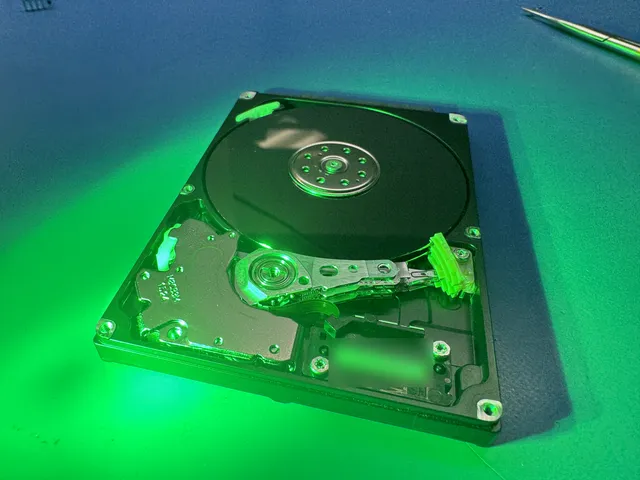
BitLocker Drive, Lost Recovery Key: What's Possible
Our founder and lead technician, Joseph Montanti, handles cases personally.
You can look up a BitLocker recovery key saved to your Microsoft account for free; there is no universal key or generator that replaces the one for your drive. If that saved copy is missing, another existing unlock method may still work, such as a data-drive password or the original computer's automatic unlock. With a locked, fully protected drive and no usable unlock method, recovery software cannot simply remove BitLocker and expose the files.
The blue recovery screen asks for a 48-digit recovery password, commonly called the recovery key. It is different from your Windows sign-in password, Windows Hello PIN and the shorter key ID shown on the screen.
On this page
Find a saved BitLocker recovery key
Use another working device to search for the saved key. Match the first eight characters of the recovery-key ID on the locked computer with the corresponding saved entry before entering its 48-digit number. Microsoft's recovery-key instructions explain the matching process and these storage locations.
- Check your personal Microsoft account. Open the Microsoft recovery-key page and sign in. Check the accounts used to set up this PC; a newer recovery screen may show an account hint.
- Check the work or school account. Use Microsoft's work-account recovery link or contact the organization's IT team. A managed device may have its key in Microsoft Entra ID or Active Directory.
- Look for a printout. Check the papers retained when the computer or encryption was set up. A printed recovery key can be used without access to a Microsoft account.
- Check USB drives and saved text files. Search backup locations for a BitLocker recovery-key file. A text copy can be opened on another computer to read the number.
- Contact whoever set up the computer. If a family member, previous owner or technician enabled encryption under their account, ask them to check their saved key list for this device.
Preserve the locked storage. While needed files remain locked, avoid formatting, resetting Windows, clearing the TPM or changing firmware settings to force access. If the storage is dropping out or returning repeated read errors, or a hard disk starts clicking, power it off and continue the key search on another device.
“This device does not have BitLocker keys backed up in Entra ID”
That message means the Entra device record you are viewing has no stored recovery key available there. Have IT check the correct device record and organization, any on-premises Active Directory backup, and its established recovery system. Personal account, printed and file copies may still exist elsewhere.
A computer appearing in a management portal is not proof that its key was successfully saved there. Microsoft's recovery overview describes configuring recovery-key backup and the different storage options. Organization policy and the way encryption was enabled affect where the recovery information was saved.
If the drive is already locked and the key was never uploaded, creating a new cloud backup is not a route into it. If Windows still opens the drive normally, preserve that access and follow the working-drive steps below before changing the device's account or management configuration.
When the original computer can still unlock it
BitLocker can use the Trusted Platform Module, or TPM, to protect access to the encryption keys. Changes to startup files, firmware or security hardware can trigger recovery instead of the usual automatic unlock. Microsoft's recovery process explains why the screen may appear after a change even though the disk has not mechanically failed.
Keep the original computer and board when a replacement or hardware change has interrupted access. An established fault may be repairable, or a known change may be reversible under the device maker's or IT team's instructions. Repeatedly changing Secure Boot or TPM settings without knowing the prior configuration can add another access problem.
If Windows starts and the encrypted volume opens, copy the files you need to another device before further repair or hardware changes. Interrupt that copy if reads begin failing or the drive disconnects; a hard disk that starts clicking also needs to be stopped. Then, while authorized access remains available, save the recovery key through Manage BitLocker → Back up your recovery key. Keep a second copy of the key offline so you can still unlock the drive if you lose access to the account.
Microsoft lists the account, USB, file and print backup options. Keep the saved key separate from the encrypted drive, and check that you can retrieve it. A key backup helps unlock data; the separate file copy protects against a storage failure.
An external or secondary data drive may instead unlock with its own BitLocker password. That password is a configured access method, not the computer's ordinary Windows password. A healthy removable drive can be connected to another Windows PC and unlocked with a supported password or recovery key. Moving it does not create a new key. If the volume still won’t mount with the correct key or gives read errors, dismiss any format prompt and disconnect the drive for imaging.
What each recovery situation requires
| Situation | What recovery depends on |
|---|---|
| You have the key, but storage has unreadable sectors | Capturing the needed sectors, including usable encryption information and file contents |
| You have the key, but the volume appears RAW or corrupted | Surviving BitLocker metadata, or suitable recovery information such as a matching key package |
| The original PC still unlocks the drive | Using that access to copy files and back up the recovery key before changing hardware |
| BitLocker protection was already suspended | Whether a usable clear key remains; suspension leaves the file data encrypted |
| No working password, recovery material or automatic-unlock path remains | A fully protected locked volume has no supported keyless recovery route |
Suspended protection and paused encryption are different states. Microsoft explains that suspension leaves the decryption key available in the clear while the data remains encrypted. An unfinished encryption process, by contrast, does not guarantee that the files you want are in an unencrypted area.
Before paying for a “BitLocker unlock” service, establish which key, credential or working device it will use.
When the drive is also damaged
Physical recovery and decryption solve different problems. Imaging captures readable sectors from the device. Decryption uses valid access information to interpret encrypted sectors. Possessing the recovery key is useful, but destroyed file contents or missing encryption metadata can still prevent recovery.
BitLocker does not require every sector of the whole drive to be readable before any file can be recovered. However, damage to the metadata protecting the volume keys can affect access far beyond the particular bad sectors. A usable copy of that metadata, or a matching recovery key package paired with its recovery password, can be important.
Microsoft's repair-bde documentation describes recovery from damaged BitLocker volumes using valid recovery information. It is not a key generator, and it overwrites its chosen output volume. That work belongs on appropriate copies and a separate expendable destination after the source has been preserved.
For a failing drive, discuss the hardware condition and available unlock information before arranging recovery work. The diagnostic fee is $100 and is credited when recovery succeeds; recovery work requires approval of the estimate. If all unlock options are missing, repairing the hardware may restore communication with the drive while leaving its contents encrypted.
Get help with data recovery
Bring your device to our Lincroft lab during opening hours, or mail it in.
How to mail your deviceThe $100 diagnostic is non-refundable once diagnostics start, and donor drives or replacement parts you approve are non-refundable once ordered, even if recovery fails.
Published by MDrepairs
MDrepairs is a data recovery and electronics repair lab in Lincroft, New Jersey. Our founder and lead technician Joseph Montanti films real cases for our YouTube channel, showing tools, repair steps and recovery outcomes.
Keep reading
- External Drive Says “The Parameter Is Incorrect”: Data-Safe Checks

- External Hard Drive Freezes File Explorer or the Computer: Safe Next Steps

- “The Semaphore Timeout Period Has Expired” During a Drive Copy